Kinkakuji temple
|
TEL : 075-461-0013 Address : 1 Kinkakujicho, Kita Ward, Kyoto Access : JR Kyoto Station > (city bus number 205) > Kinkakuji-michi bus stop Parking : There is a parking lot(Paid) Hours : Opning 9:00 – Closing 17:00 Entrance fee : 500 yen |
About Kinkaku (Golden Pavilion)
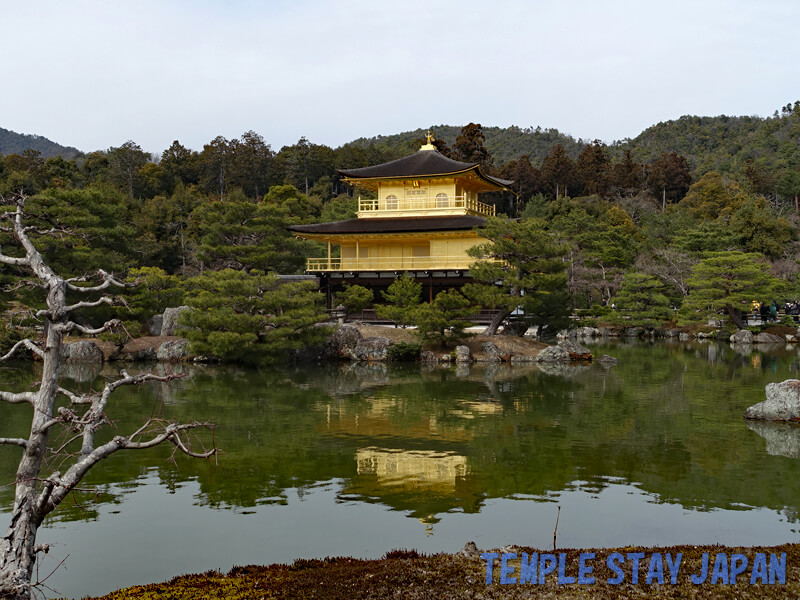
Its official name is Rokuonji, but it is known as Kinkakuji because of the Kinkaku (Golden Pavilion) located on its grounds.
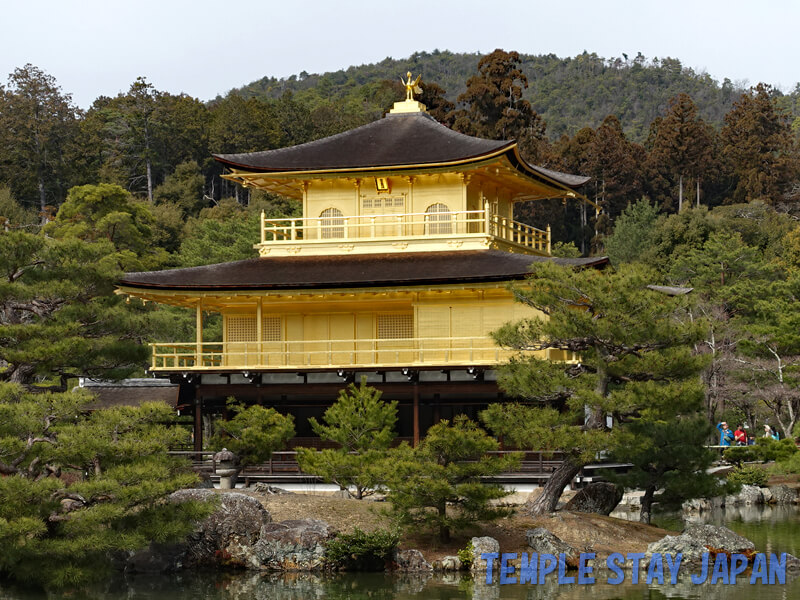
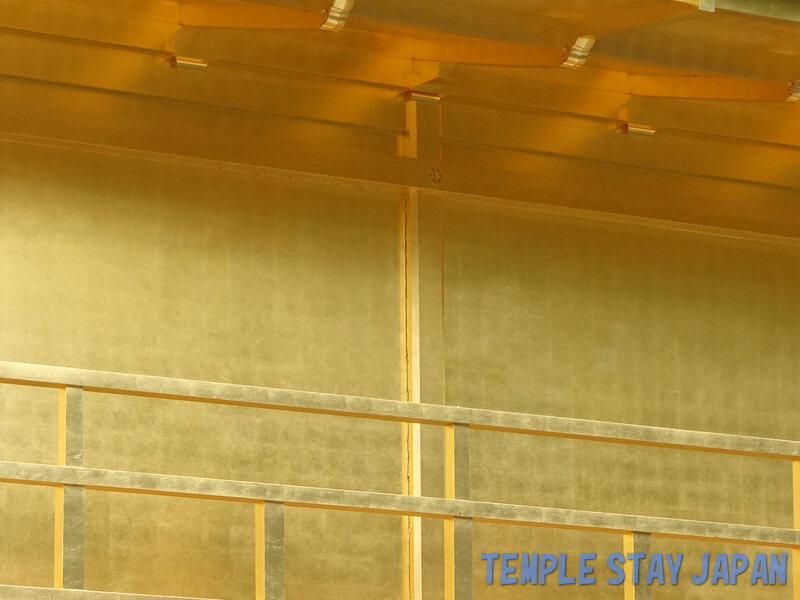
The Golden Pavilion is a three-story structure; it is unique in that its upper two stories are covered with genuine gold leaf. If you look at it magnified, you can see the traces where the gold leaf was applied.
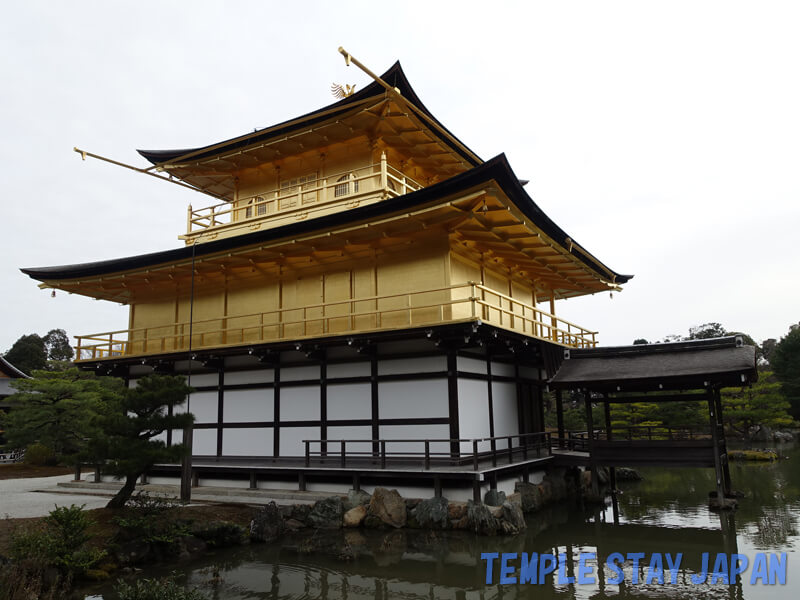
From the back, you can see that the first floor is not covered in gold leaf.
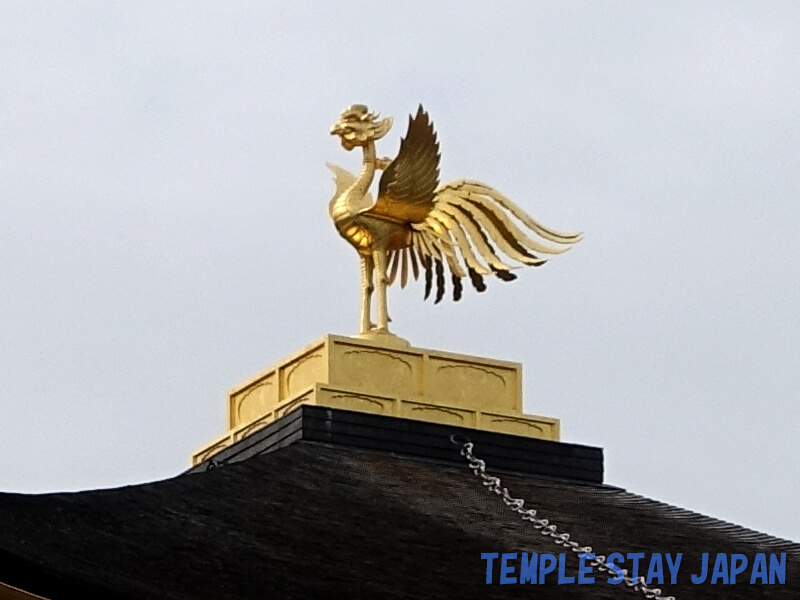
A phoenix spreads its wings atop the roof.
The History of Kinkakuji temple
Kinkakuji was originally a temple called Saionji. In 1397, Ashikaga Yoshimitsu renovated the residence to serve as a mountain villa. He is the third shogun of the Muromachi Shogunate.
The Golden Pavilion was built around 1399. And after the death of Ashikaga Yoshimitsu, it was named Rokuonji.
Subsequently, it flourished under the patronage of the Tokugawa shogunal family. Although it once declined in the modern era, it overcame that setback and has been passed down to the present day.
Other Highlights
While the Golden Pavilion is the standout feature of Kinkakuji, there are various other highlights to see as well.
Temple Living Quarters
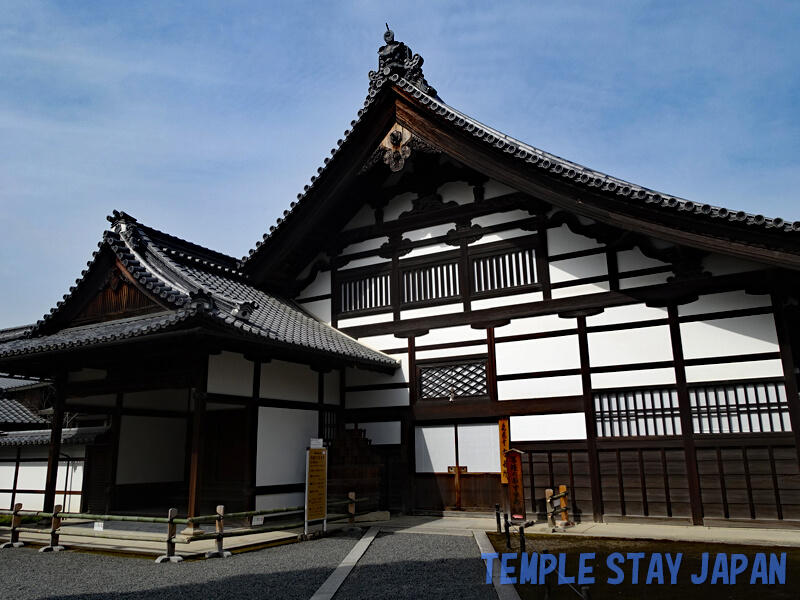
This building, constructed around 1492–1504, features a style characteristic of the Zen sect. It is located just past the main gate.
Belfry
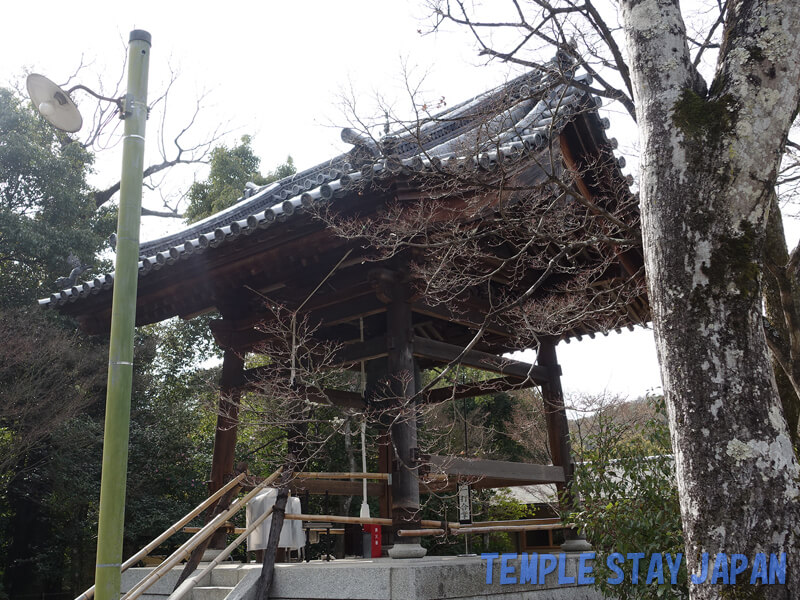
A temple bell cast during the Kamakura period (1185–1333) is suspended there. It uses the note “A” – known as the bell tone of the Oshiki-cho mode- as its reference pitch.
It is located near the Temple Living Quarters, but it is set back a bit from the approach, making it difficult to see.
The Pine of the Land-bound Boat
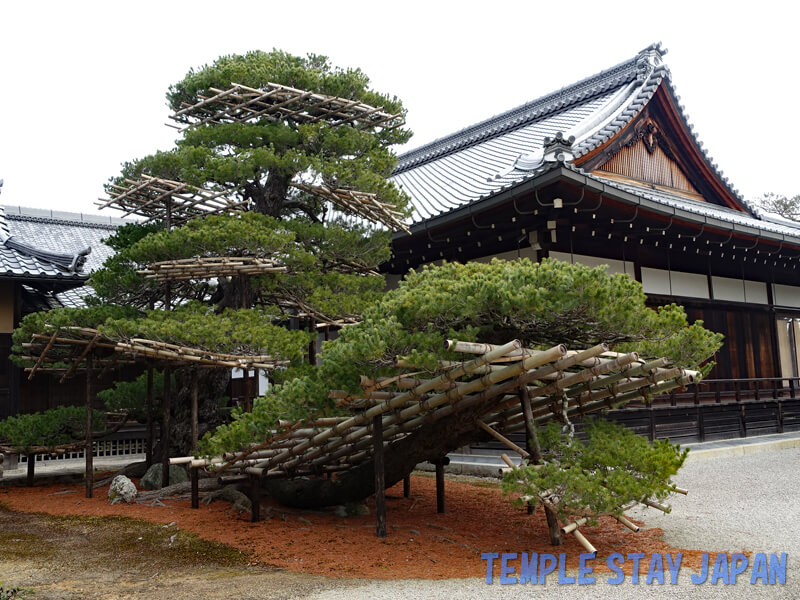
It is located on the opposite side of the approach from the Golden Pavilion. It is said that this bonsai, originally cultivated by Ashikaga Yoshimitsu, was trained into the shape of a boat. The tree is approximately 600 years old.
Anmin Pond, where a white snake is enshrined
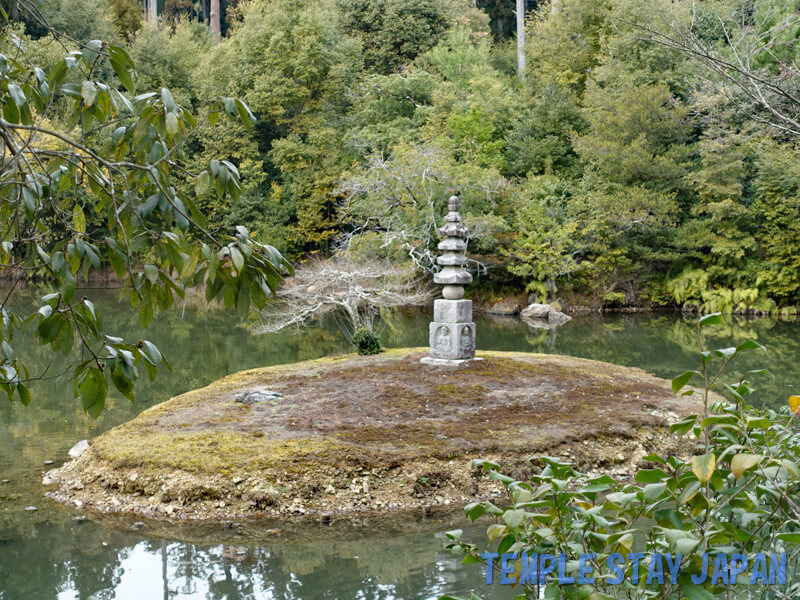
It is a pond located up the slope after you pass the Golden Pavilion. There is a mound dedicated to a white snake on the island in the center.
The white snake is a messenger of Benzaiten (Sarasvati) and brings blessings for financial fortune and proficiency in the arts.
Sekka-tei, an old tea house
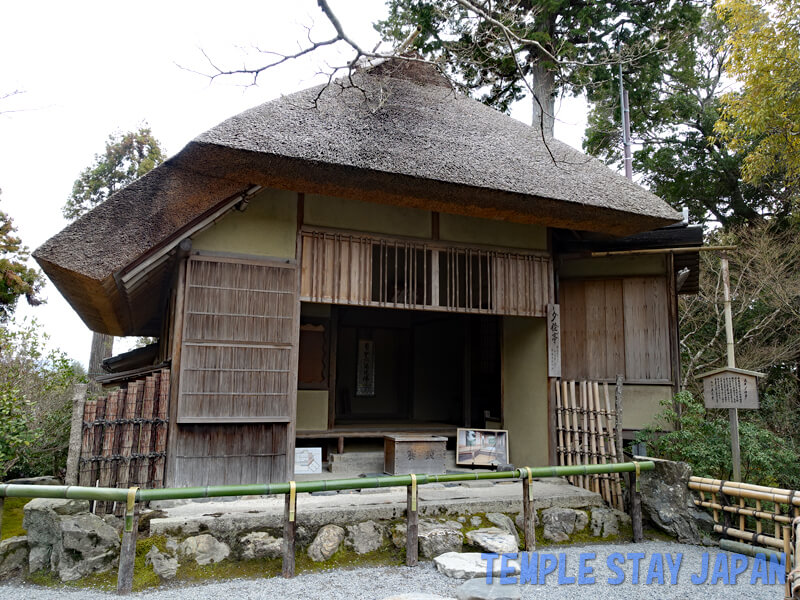
Sekka-tei is a tea house built on high ground overlooking the Golden Pavilion. This name is Japanese and means that the evening hours are wonderful. It was named after the combination of the sunset and the Golden Pavilion.
Fudo Myoo (Acalanatha), protector of the head and eyes
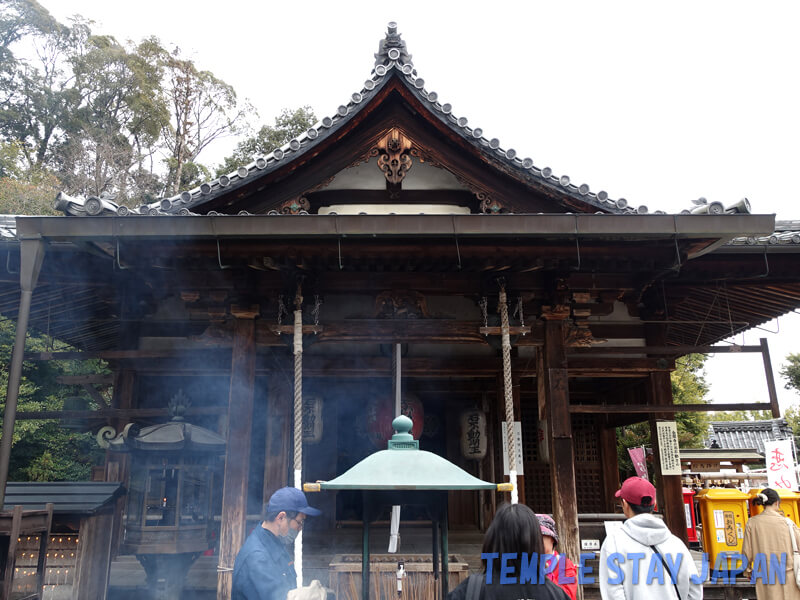
The Fudo-do Hall, located near the exit of the temple grounds, enshrines a stone statue of Fudo Myoo (Acalanatha) said to have been carved by Kobo Daishi. He is one of the most famous monks in Japanese history.
It is said that this Fudo Myoo heals ailments of the head and eyes. Memorial services involving the opening of the sanctuary doors are held on February 3 and August 16.
Shopping at various stores
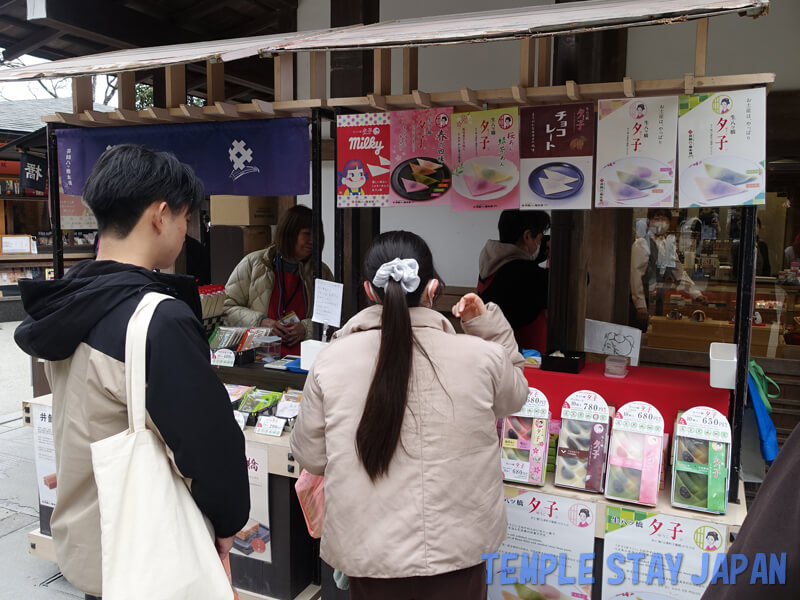
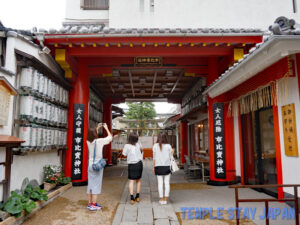
There are many souvenir shops and restaurants within the temple grounds, in the parking area, and in the surrounding town.
Things to do
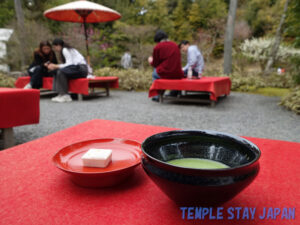
You can enjoy a variety of experiences within the grounds of Kinkakuji.