Kyoto City? category ?
-

Kenninji temple (Kyoto) Copying sutras at a Zen temple
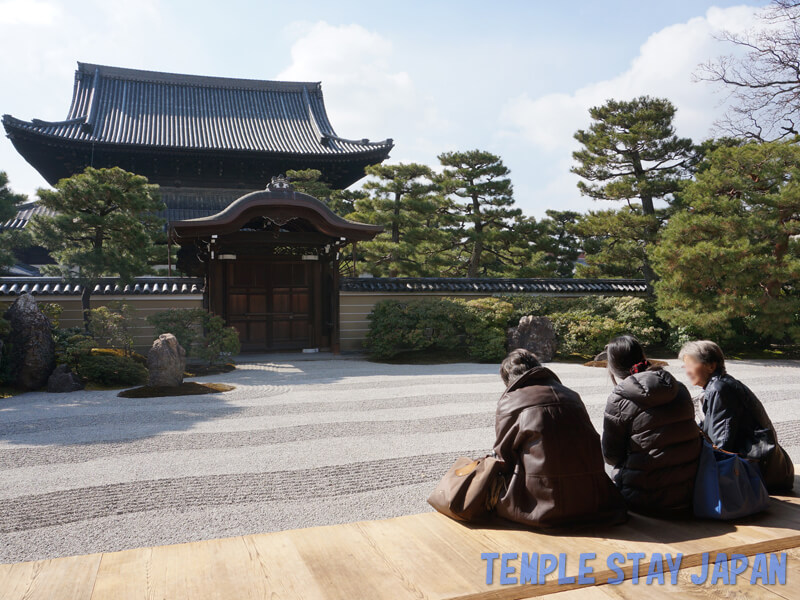
Kenninji Temple was founded in 1202 and is the oldest Zen temple in Kyoto. It is the head temple of the Kenninji branch of the Rinzai sect. Copying sutras was available to visitors at any time without the need for a reservation. The Heart Sutra was printed lightly on the copying paper, and I traced it over. -
Kenninji temple (Kyoto) Kyoto’s oldest Zen temple
Kenninji Temple was founded in 1202 and is the oldest Zen temple in Kyoto.It is the head temple of the Kenninji branch of the Rinzai sect. Many cultural assets have been preserved, including the National Treasure Wind God and Thunder God Screen, architecture, gardens, paintings, and more. -
Kadode-hachimangu shrine (Kyoto) : A Blessing for the departure
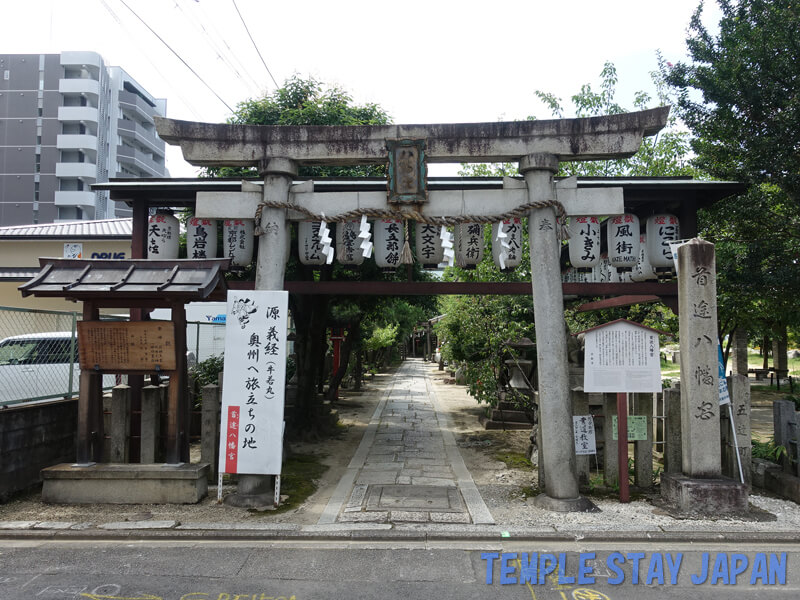
"Kadode" is a Japanese word meaning "departure". This place is known as the site where Ushiwakamaru (Minamoto no Yoshitsune) prayed for safe travels before setting out on his journey. He won many battles with his unconventional strategies and is famous as a historical hero. -
Tanukidanisan-Fudoin temple (Kyoto) : Raccoon dog and cliff-hanging main hall
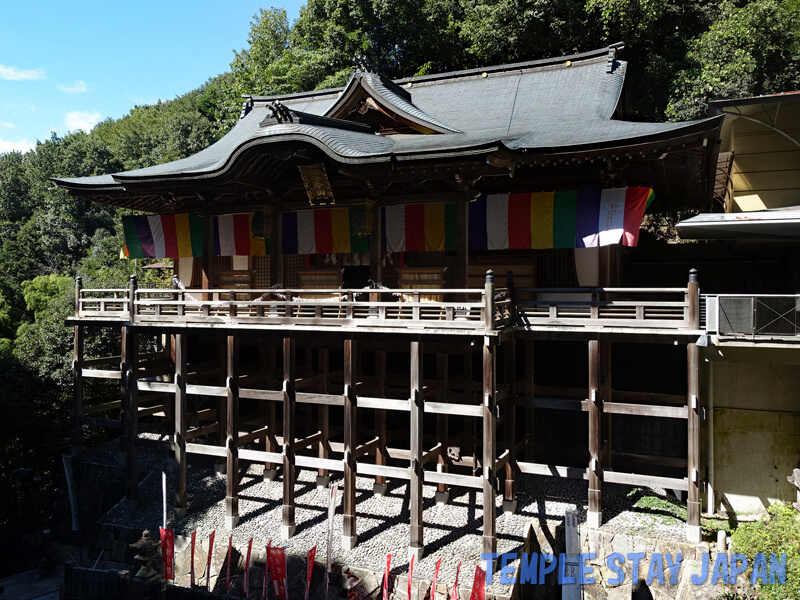
Tanukidanisan-Fudoin Temple is located in the northeastern part of Kyoto City, in a place formerly known as raccoon dog valley. When I reached the entrance to the temple, I was greeted by a row of raccoon dog figurines. The main hall is built in an impressive cliff-hanging style. -
Hoonin temple (Kyoto) : Remove suffering with a lasso
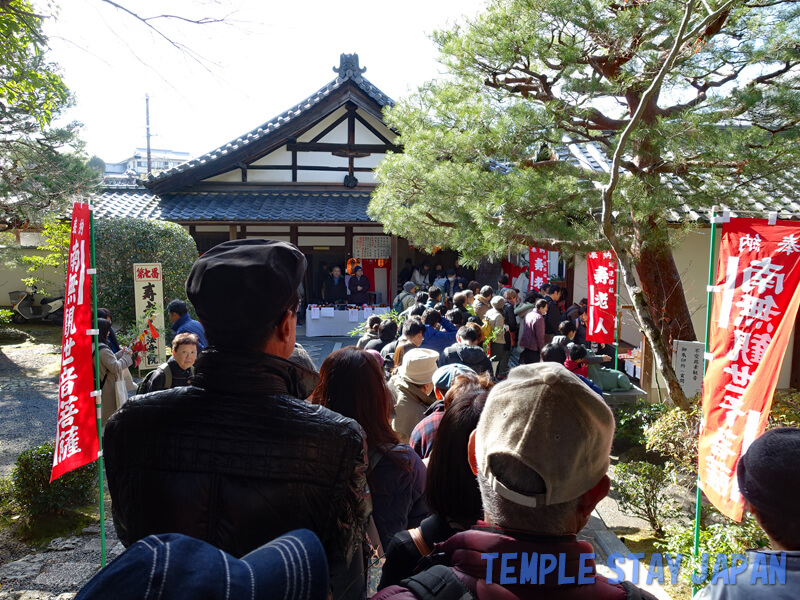
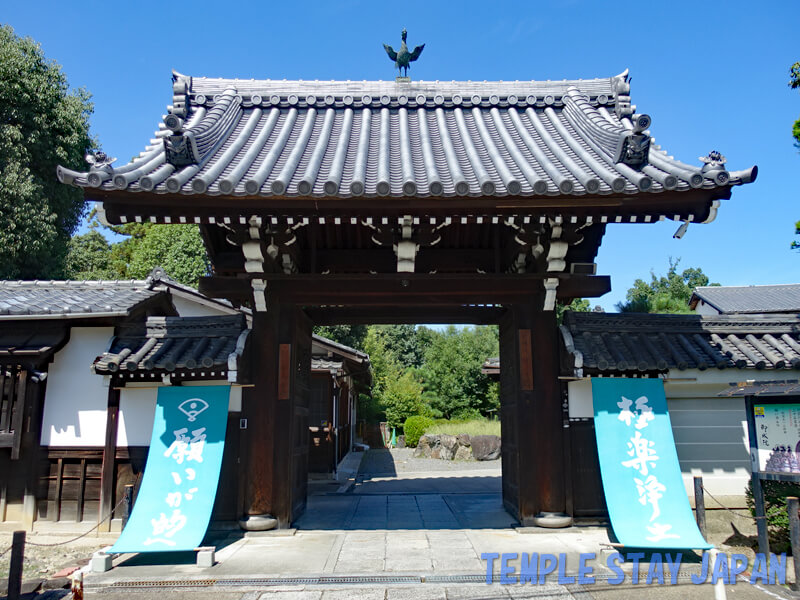
Hoonin Temple was founded in 1326. The principal image is the Amoghapasa. Amoghapasa holds a lasso and is said to be able to capture and remove all suffering. I also visited the hall where Jurojin is enshrined. A deer is sitting next to him with a calm expression on its face. -
Shonenji temple (Kyoto) Temple saved by a cat
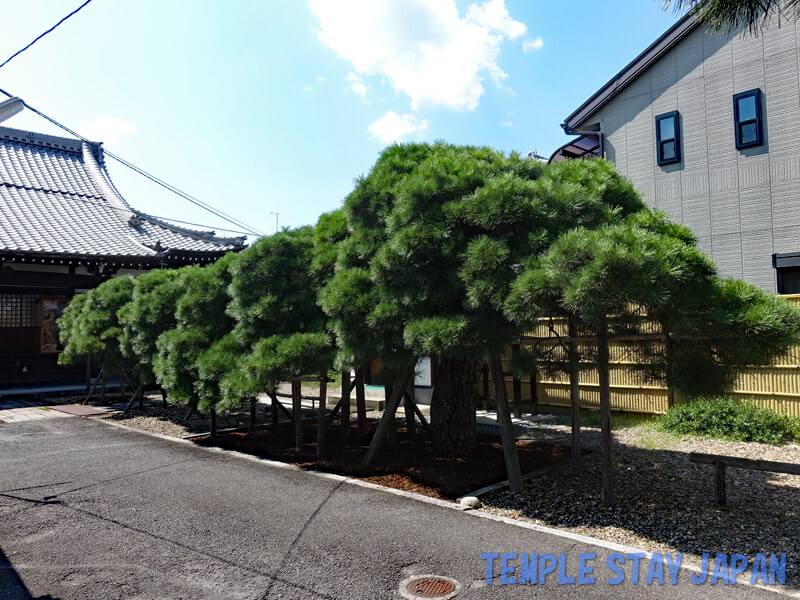
Shonenji Temple was founded in 1606. The story goes that when the temple fell into ruin, a cat kept by the head priest connected with the lord and helped the temple to be restored. The pine tree in the temple grounds is said to represent a lying down cat. There were signs and charms with illustrations of cats on them. -
Sokujoin temple (Kyoto) : Amitabha from the Pure Land
It is said that Amitabha, along with twenty-five Bodhisattvas, comes from the Pure Land to welcome the deceased. Sokujoin Temple has preserved a group of Buddha statues that recreate this scene for nearly 1,000 years. -
Tofukuji temple (Kyoto) : Three ancient wooden bridges
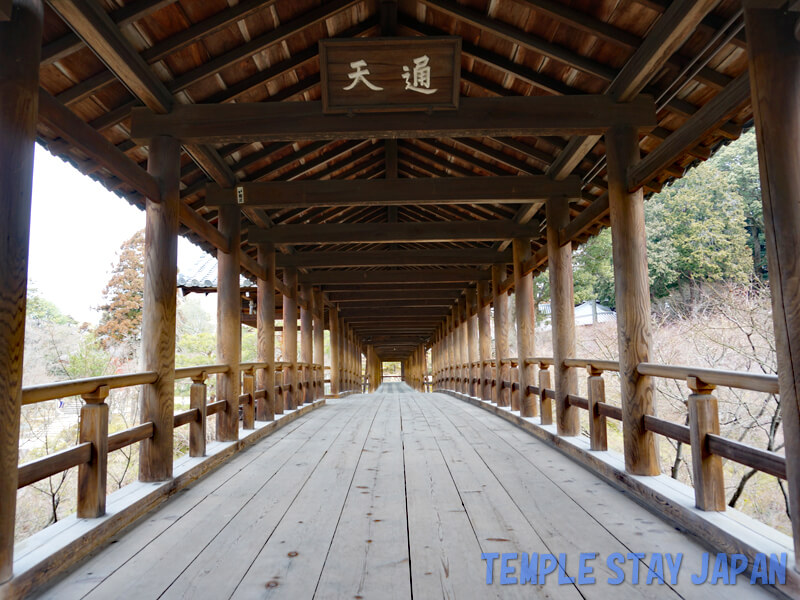
Tofukuji Temple is the head temple of the Tofukuji branch of the Rinzai sect of Buddhism and was founded in 1236. The Sanmon Gate is designated as a national treasure of Japan. Tofukuji Temple has three wooden bridges. During the autumn foliage season you can see some very beautiful scenery. -
Sanjusangendo temple (Kyoto) : A Thousand Buddha Statues
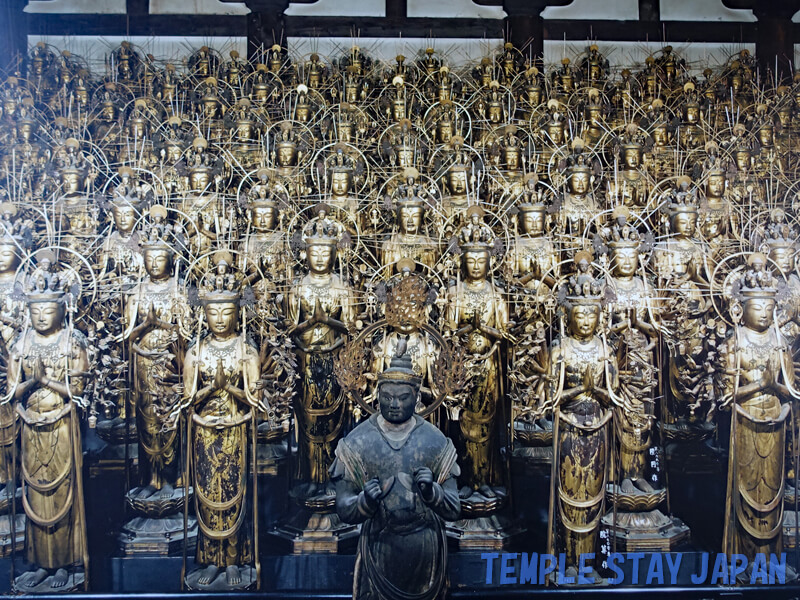
The main hall of Sanjusangendo was built in 1164. It was later destroyed by fire, but was rebuilt in 1266 and remains as it is today. Inside the hall, there are 1,000 Thousand-Armed Kannon (Sahasrabhuja) statues lined up. The main hall and the group of Buddhist statues are all designated as national treasures. -
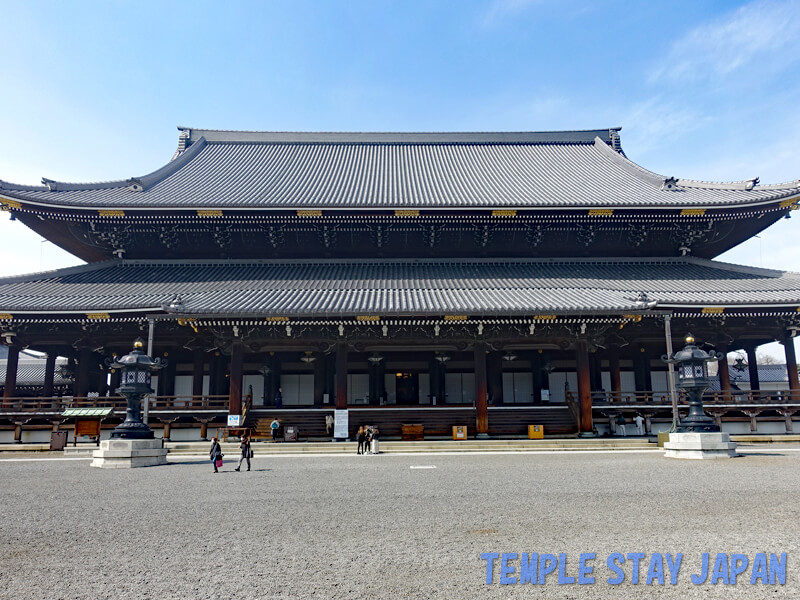
Higashi-Honganji temple (Kyoto) : Huge wooden buildings
Higashi-Honganji is the head temple of the Jodo Shinshu Otani sect. It is located very close to Kyoto Station. There are many buildings designated as important cultural properties within the temple grounds. The Goeido (Main) Hall is one of the largest wooden buildings in the world.