Kyoto’s temples and shrines with unique worship experiences
2026
7/14
Kyoto has many temples and shrines with unusual ways of worshiping. Throwing things, dipping them in water, lifting them up, and putting them through holes. By performing special actions, your wishes will be more likely to come true. Here are some recommended places.
Kyoto’s temples and shrines with unique worship experiences
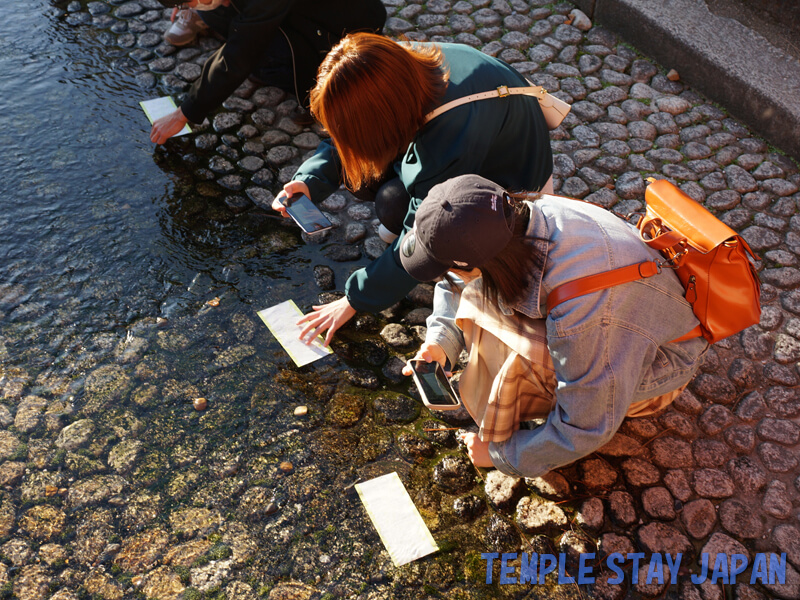
Shimogamo Shrine’s “Water Fortune”
There is a water fortune slip that will show the words when you dip it in water. It is held at the sacred Mitarashi-ike Pond. You can predict love, health, financial luck, etc.
more information
Shimogamo shrine (Kyoto) : Forest and Water Shrine
Shimogamo-jinja is a shrine with a long history, first mentioned in records as far back as 90 BC. The two main buildings are designated as Japanese national treasures. The forest within the shrine grounds covers an area of 124,000 square meters, and ancient vegetation still remains.
Kawai Shrine’s “Hand-mirror-shaped votive plaque”
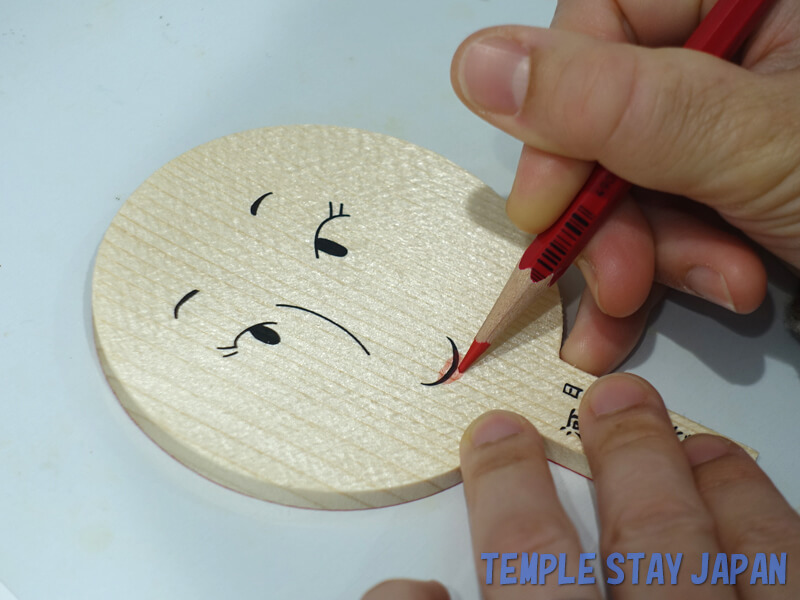
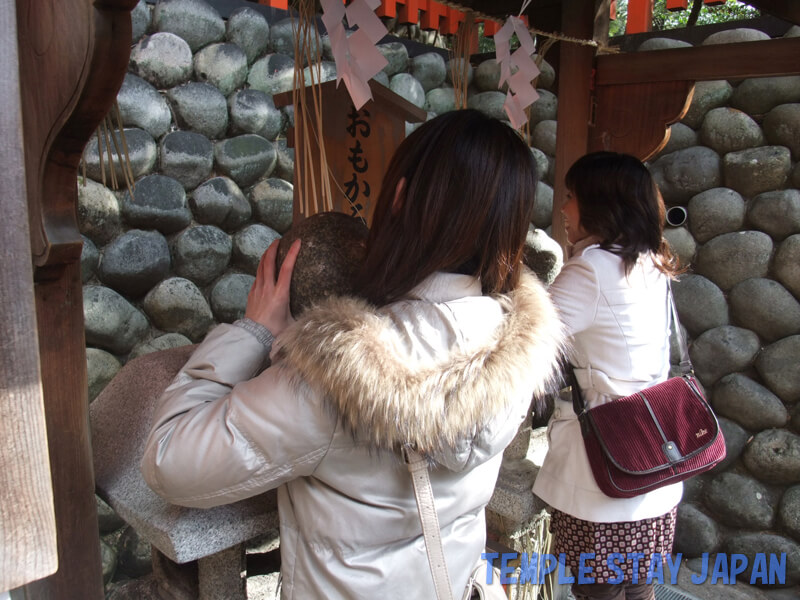
Kawai-jinja Shrine is located within the grounds of Shimogamo-jinja Shrine. A beautiful goddess is enshrined here, and it is said that those who pray there will become beautiful.
You can draw a face on a hand-mirror-shaped votive plaque and offer it as an offering.
more information
Kawai shrine (Kyoto) : Votive plaque for praying for beauty
Kawai-jinja Shrine is located within the grounds of Shimogamo-jinja Shrine. A beautiful goddess is enshrined here, and it is said that those who pray there will become beautiful. The experience of drawing a face on a hand-mirror-shaped ema (votive plaque) is popular.
Yasui-Konpiragu Shrine’s “Prayer for severing ties”
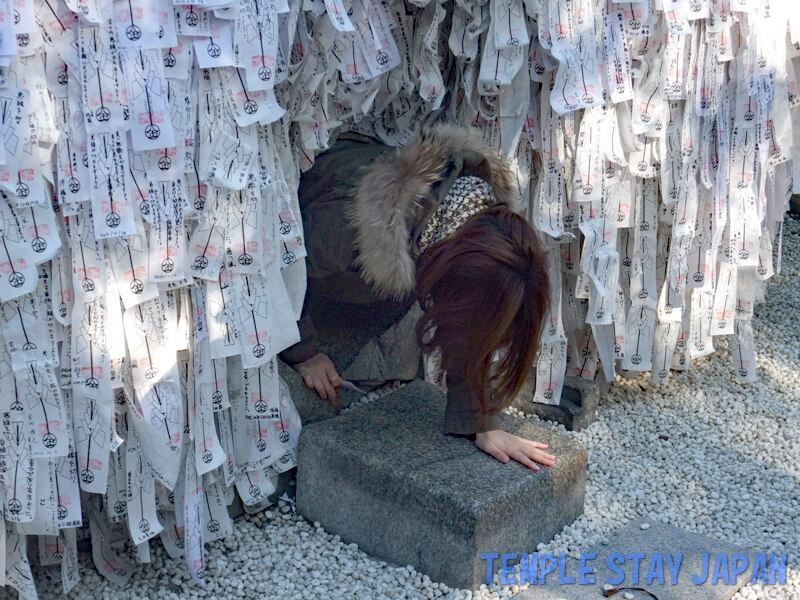
Yasui-Konpiragu Shrine is famous as a shrine where people pray for the severance of relationships. There is a stone in the precincts where people pray for severing ties and finding love.
You pray through the hole in the middle. After that, you attach a piece of paper with your wish written on it.
more information
Yasui-Konpiragu shrine (Kyoto) : Prayer for severing ties
Yasui-Konpiragu Shrine was founded between 668 and 671. This shrine is famous for severing ties. There is a stone in the precincts where people pray for severing ties and finding love. You pass through from the front to the back while praying to cut ties.
Kisshoin Tenmangu Shrine’s “The Golden Cow”
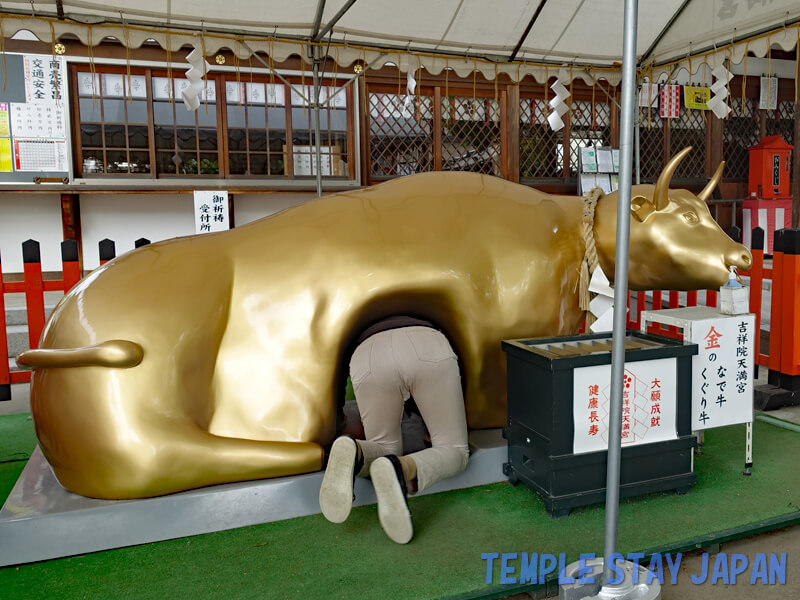
Kisshoin Tenmangu Shrine is known as the birthplace of Sugawara no Michizane, a man of great academic excellence. The cattle is his messenger. There is a golden reclining cattle with a hole in it in the precincts.
It is said that if anyone takes the exam, they will pass if they pass through this hole.
more information
Kissyoin-Tenmangu shrine (Kyoto) : Cattle that passed the test
Kichijoin-Tenmangu Shrine was built in 934 on the site where Sugawara no Michizane was born. The cattle is a messenger of Sugawara no Michizane. There is a golden reclining cattle with a hole in it in the precincts. It is said that if anyone takes the exam, they will pass if they pass through this hole.
Jisyu Shrine’s “Love Fortune Telling Stone”
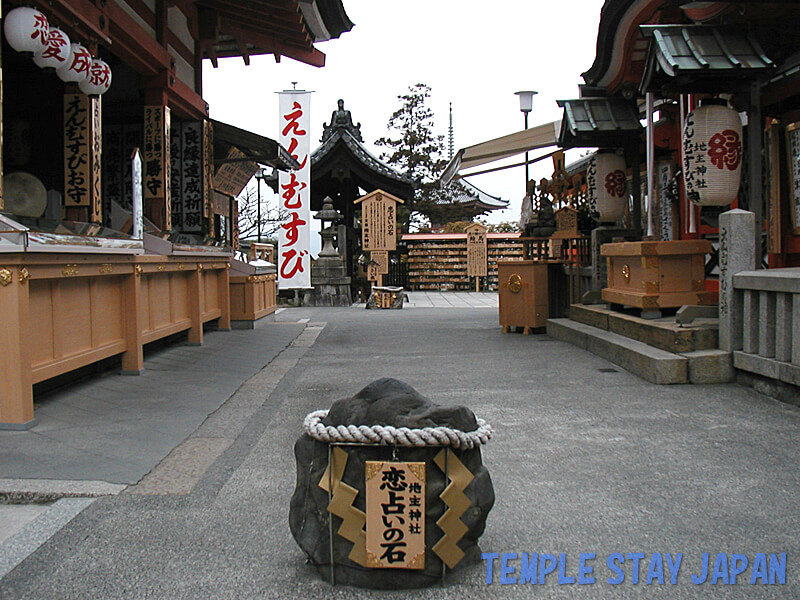
Jisyu Shrine is located at the back of Kiyomizu-dera Temple. There are two stones in the precincts that are known as love fortune-telling stones.
It is said that if you can walk between the two stones with your eyes closed, your wish for love will come true. If you are planning to try it, we recommend going early in the morning when there are fewer people around.
more information
Jisyu shrine (Kyoto) : Love Fortune Telling Stone
Jisyu-jinja Shrine is located at the back of Kiyomizu-dera Temple. It is said that if you can walk between the two stones with your eyes closed, your wish for love will come true. If you are planning to try it, we recommend going early in the morning when there are fewer people around.
Mimurotoji Temple’s “Ugajin”
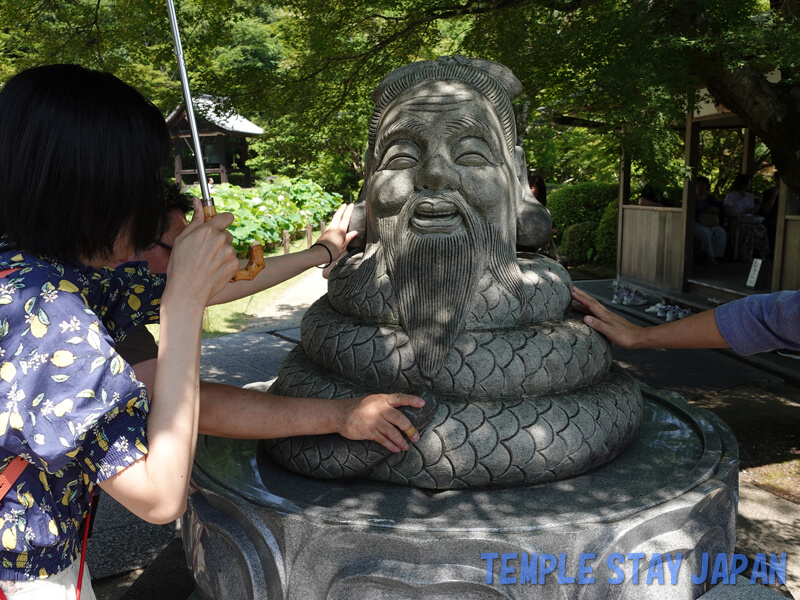
Mimurotoji Temple is a special head temple of the Shugen sect. On the side of the approach to the main hall, there is a statue of Ugajin, with the face of an old man and the body of a snake.
It is said that touching its ears will bring good fortune, stroking its whiskers will bring you good health and a long life, and stroking its tail will bring you financial luck.
Fushimi-Inari-Taisha Shrine’s “Wishing stone”
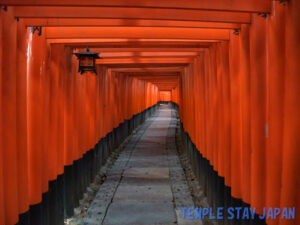
Fushimi-Inari-Taisha Shrine is famous for its rows of vermilion torii gates. As you walk along the approach to the shrine, you will come across a wishing stone.
If you lift this stone and it feels light, your wish will come true, but if it feels heavy, more effort is needed.
more information
Fushimi-Inari shrine (Kyoto) : Red Torii gates Tunnel
Fushimi-Inari is the head shrine of the 30,000 Inari shrines throughout Japan. It is said to grant good fortune in bountiful harvests, prosperous business, and safety in the home. Fushimi Inari is famous for the countless red torii gates lined up in a row. There are also wishing stone.
Yasaka-Koshindo Temple’s “Colourful monkey dolls”
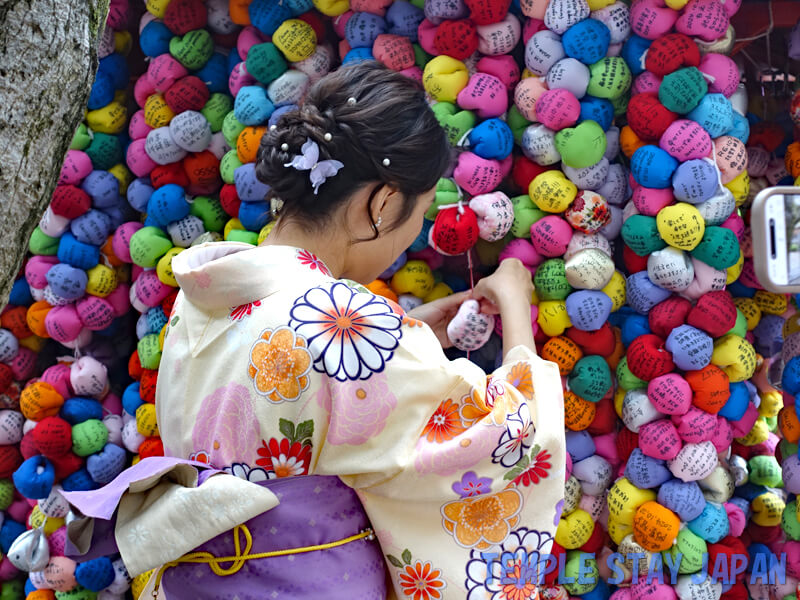
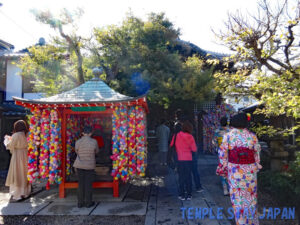
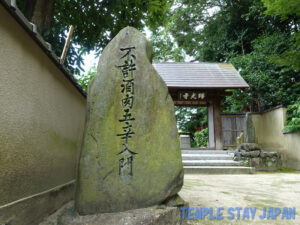
Yasaka Koshindo was built over 1000 years ago. Because monkeys move around a lot, they are also said to be symbols of desire. For this reason, there was a custom of tying the hands and feet of monkey dolls.
Nowadays, people write their wishes on colorful monkey dolls and tie them on them. Many people come to pray, and the grounds are filled with monkey dolls.
more information
Yasaka-Koshindo temple (Kyoto) Colourful monkey dolls
Yasaka Koshindo was built over 1000 years ago.Because monkeys move around a lot, they are also said to be symbols of desire. For this reason, there was a custom of tying the hands and feet of monkey dolls. Nowadays, people write their wishes on colorful monkey dolls and tie them on them.
Jonangu Shrine’s “Amulets given by shrine maiden”
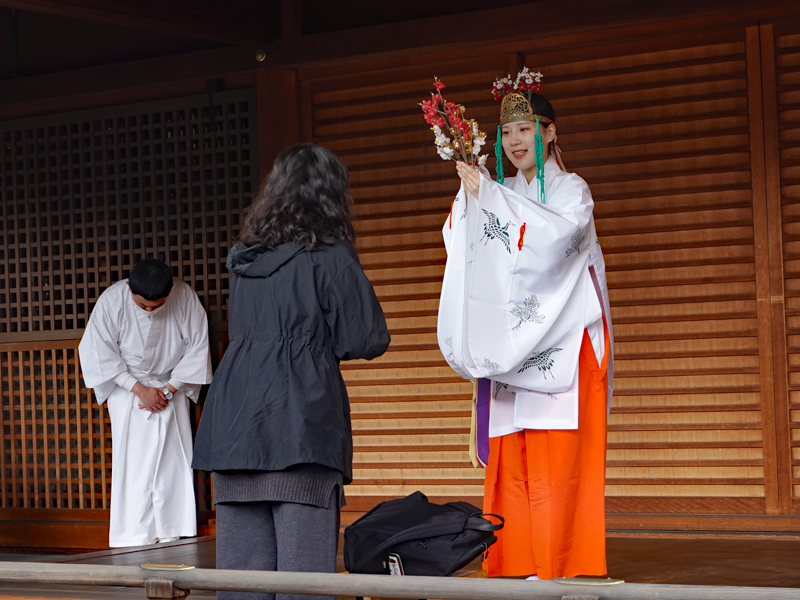
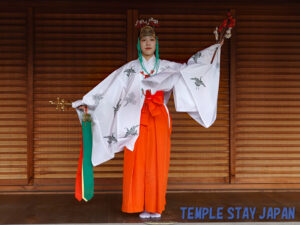
Jonangu Shrine was built in 794 when the city of Kyoto was founded. Jonangu Shrine was built in 794 when the city of Kyoto was founded. Shrine maiden dances are performed regularly. It is held every day from mid-February to mid-March, and on weekends and holidays in May and September.
After the shrine maiden dance, worshippers are given amulets.
more information
Jonangu shrine (Kyoto) : Shrine Maiden Dance
Jonangu Shrine was built in 794 when the city of Kyoto was founded. Shrine maiden dances are performed regularly. I went there in March, and the shrine maidens were wearing plum blossoms in their crowns and dancing while holding branches. After the shrine maiden dance, worshippers were given amulets.
Kyoto-Ebisu Shrine’s “Knocking prayer”
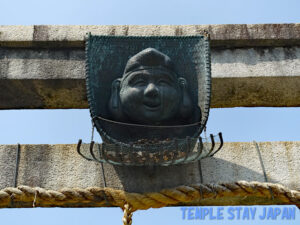
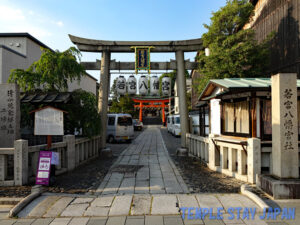
Kyoto Ebisu Shrine is one of the most famous Ebisu shrines in Japan. It is said to bring good fortune in business prosperity.
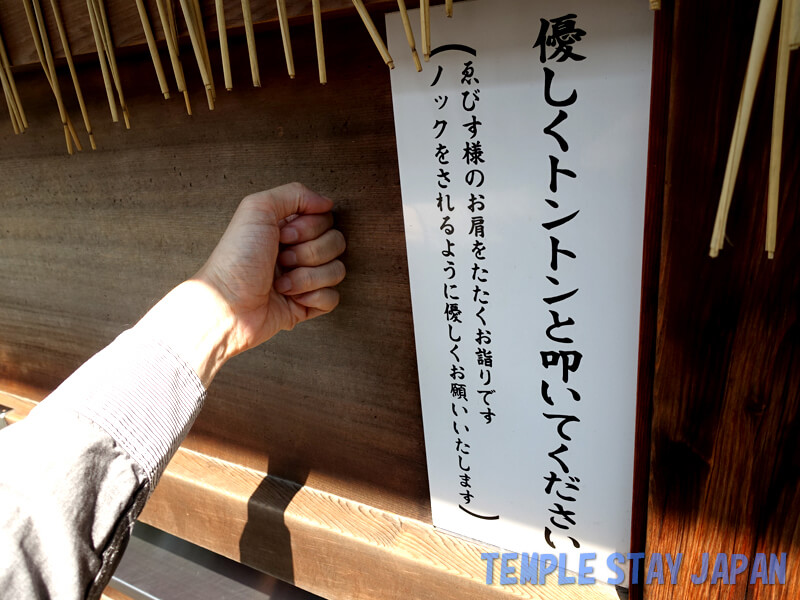
This DIVINE BEING is elderly and hard of hearing, so it is said that praying to him will help you by tapping lightly on the wall next to the worship hall.
more information
Kyoto Ebisu shrine (Kyoto) : One of Japan’s three great Ebisu shrines
Kyoto-Ebisu-jinja shrine was built in 1202 as the guardian shrine of Kenninji Temple. It is considered one of the three greatest Ebisu shrines in Japan. Ebisu is depicted holding a fishing rod and a sea bream, and is believed to bring good fortune for safe voyages and travels, as well as success in fishing and business.
Utsukushi-gozen-sha Shrine’s “Beauty Water”
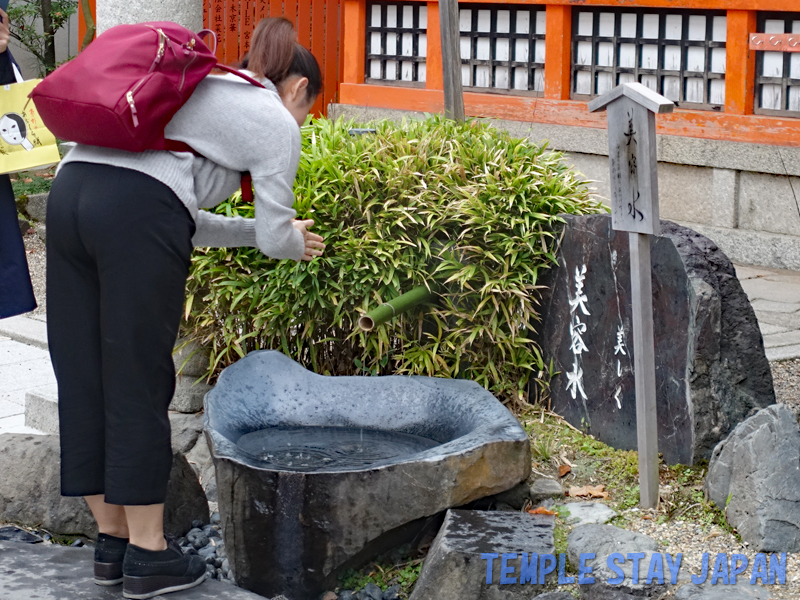
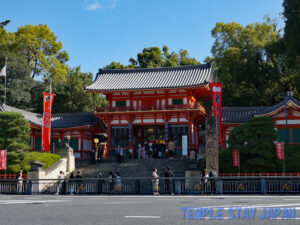
Three beautiful goddesses are enshrined at Utsukushi-gozen-sha Shrine, located within the grounds of Yasaka-jinja Shrine. Since ancient times, many people who wish to become more beautiful, such as geisha and maiko from Gion, have visited the shrine.
It is said that if you apply a small amount of the water in front of the shrine to your skin and pray, you will beautify both your body and mind.
more information
Yasaka shrine (Kyoto) : Praying for beauty and love
Yasaka Shrine is an ancient shrine that dates back to before 794, when the city of Kyoto was founded. It is the head shrine of the approximately 2,300 Yasaka shrines in Japan. The main hall is the largest of its kind among shrine buildings and is designated a national treasure. Yasaka Shrine has two popular sub-shrines.
Mikane Shrine’s “Golden Torii gate”
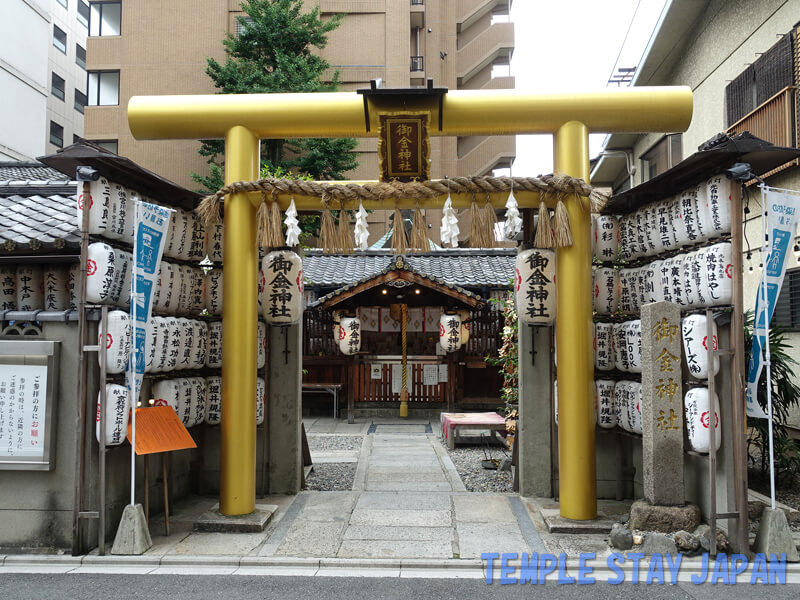
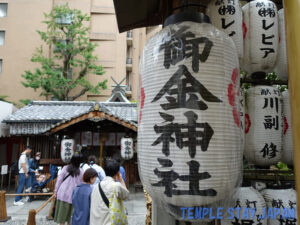
Mikane Shrine is a small shrine located in the city center on the east side of Nijo Castle. It is said to protect metals and minerals. The name “Mikane” means money in Japanese, so the shrine has become famous as a shrine for financial luck.
There is a golden torii gate at the entrance. I feel like I could become rich just by walking through it.
more information
Mikane shrine (Kyoto) : The shrine named Money
Mikane-jinja Shrine enshrines the guardian deity of metals and minerals. Gold coins have been minted in this area since ancient times. The name “Mikane” means money in Japanese, so the shrine has become famous as a shrine for financial luck. There is a golden torii gate at the entrance.
Zuikoji Temple’s “Washing Money”
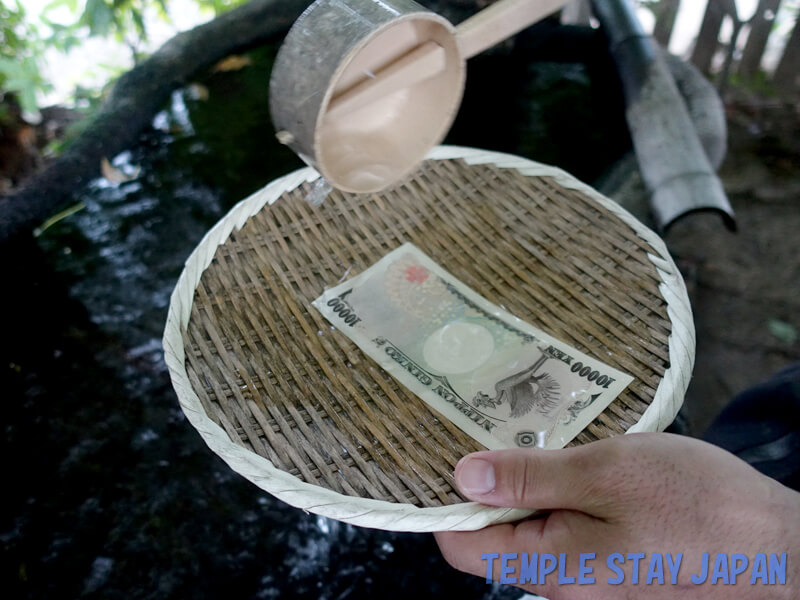
Zuikoji Temple is located about a 10-minute walk south from Fushimi Inari Taisha Shrine. Within the temple grounds, there is a place where you can wash your money in water while praying to the dragon god.
If you put the washed money in your wallet or a special amulet bag, you will be blessed with good fortune in terms of money.
more information
Zuikoji temple (Kyoto) : Wash your money to improve your fortune
Zuikoji Temple was founded in 1655. The main hall has a thatched roof. The main image of the temple is a statue of Sakyamuni enshrined inside the hall. A white dragon is enshrined near the entrance to the temple grounds. It is said that washing money here will bring you good fortune.
Wakamiya Hachimangu Shrine’s “Mirror of Beauty”
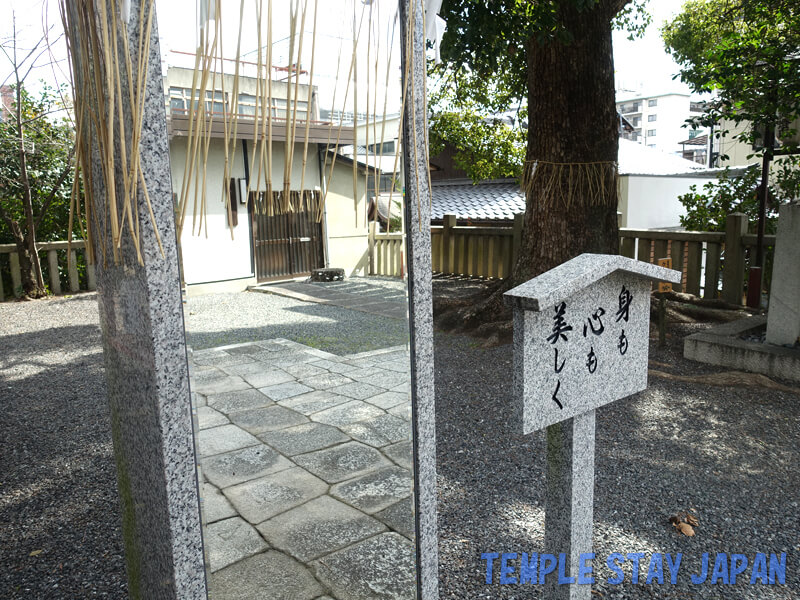
Wakamiya Hachimangu Shrine is located about a 10-minute walk west from Kiyomizu-dera Temple. There is a large mirror in the shrine grounds where you can see your entire body.
Next to it is written in Japanese: “Beautiful in body and mind.” If you take a look at yourself and correct your appearance before praying, you will likely receive many blessings.
more information
Wakamiya-Hachimangu shrine (Kyoto) : The deity of pottery
It is said that Wakamiya-Hachimangu shrine was founded in 1053 at the behest of Emperor Go-Reizei. The enshrined deities are Emperor Ojin, Emperor Chuai, and Empress Jingu. Furthermore, in 1949, Shiinetsuhiko-no-Mikoto, the deity of pottery, was enshrined there, making it famous as a pottery shrine.
Jingoji Temple’s “Unglazed Plate Throwing”
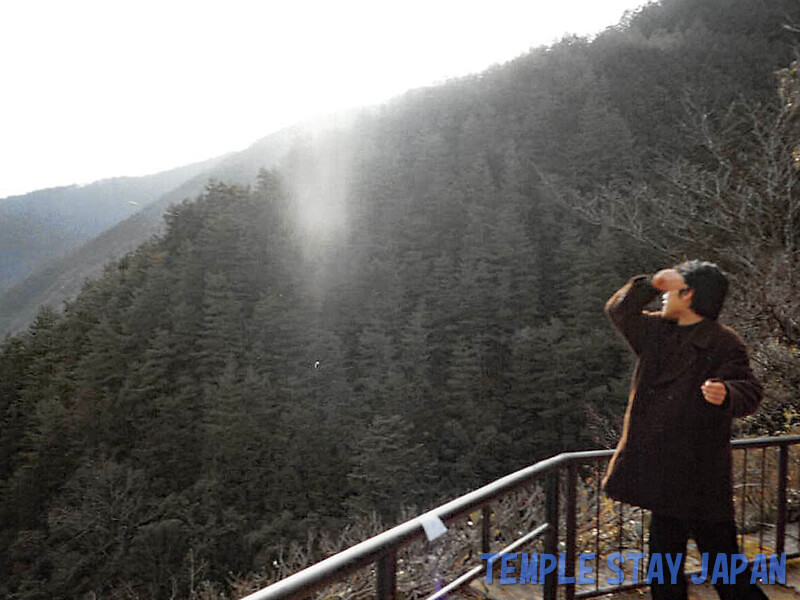
Jingoji Temple is located on the slopes of Mount Takao in northwestern Kyoto. You can have the unique experience of throwing unglazed clay plates called kawarake into the valley.
It originates from an ancient warrior who would throw his sake cup to the ground in prayer for victory. Nowadays, people fly them as far as possible to pray for protection from evil.
more information
Jingoji temple (Kyoto) : A renowned temple on Mount Takao
It is a temple situated halfway up Mount Takao. Kukai, one of Japan’s most famous monks, served as the head priest here for 14 years starting in 809. It houses numerous temple treasures, including a National Treasure statue of Yakushi Nyorai. The experience of throwing unglazed earthenware plates is popular.
Kiyomizu-dera Temple’s “Three waterfalls with divine blessings”
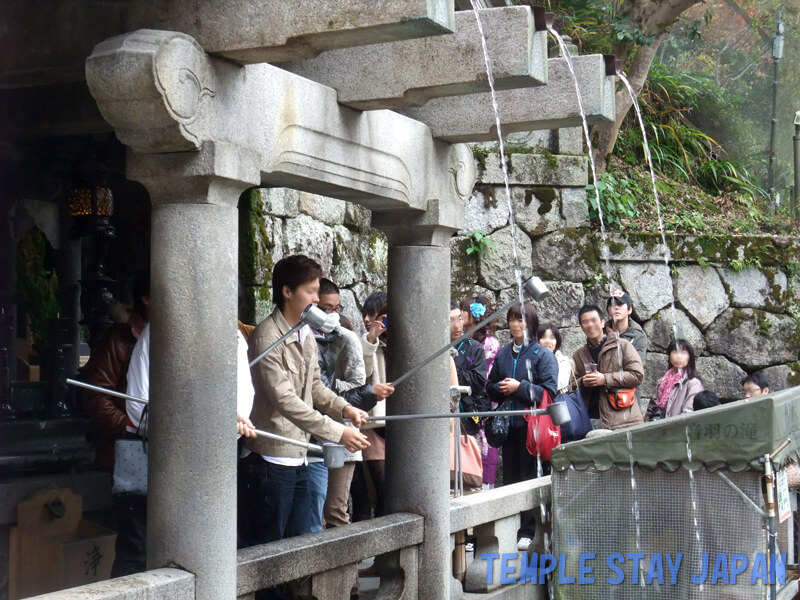
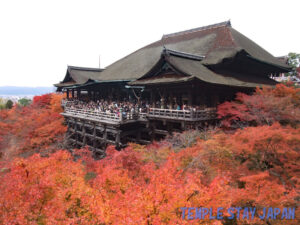
Kiyomizu-dera Temple is popular for its main hall built on a cliff. If you go down from the stage of hall, you will find Otowa Falls. This water is free to drink.
Looking at it from the front, the right one is said to grant good fortune in “longevity,” the middle one in “success in love,” and the left one in “academic success.”
more information
Kiyomizu-dera temple (Kyoto) : Building on a cliff
Kiyomizu-dera Temple was founded in 778. There are over 30 buildings within the temple grounds, including national treasures and important cultural properties. The most popular attraction at Kiyomizu-dera Temple is the stage in front of the main hall. It is built on a cliff and is 13 metres (42.65 feet) high.