Kurama-dera temple
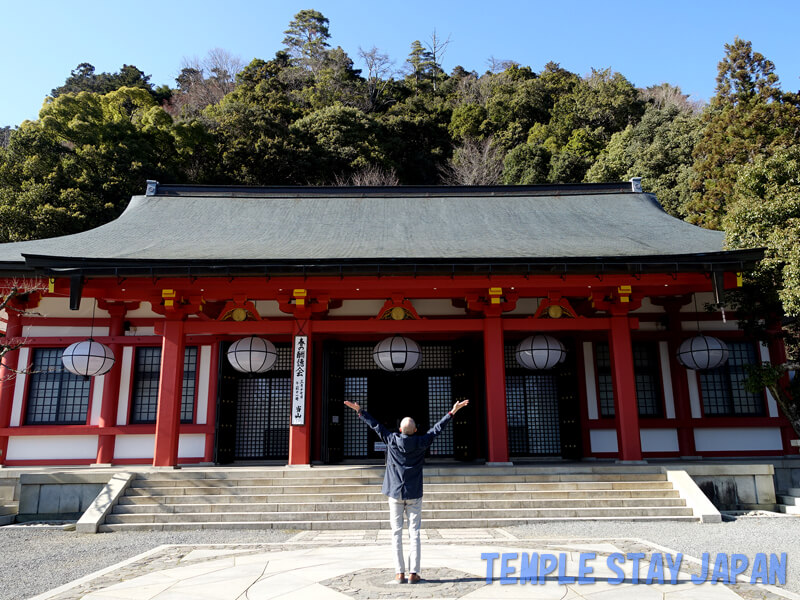
|
TEL : 075-741-2003 Address : 1074 Kuramahonmachi, Sakyo Ward, Kyoto Access : Eizan Railway Demachiyanagi Station > (train) > Kurama Station > 6 minutes walk Hours : Opning 6:00 – Closing 16:15 (Main hall) / Opning 9:00 – Closing 16:00 (Main hall) Entrance fee : Grounds 500 yen / Museam 200 yen |
Introduction to Kuramadera temple
Kurama-dera Temple originated in 770 when a monk was attacked by a female demon on Mount Kurama and built a hermitage to enshrine Bishamonten, who had saved him at that time.
There is a legend that Minamoto no Yoshitsune, a 12th-century warlord, learned military strategy from a tengu (a mountain spirit with a long nose) when he was a child. He won many battles using unconventional tactics, but is known as a tragic hero who was ultimately killed by his brother.
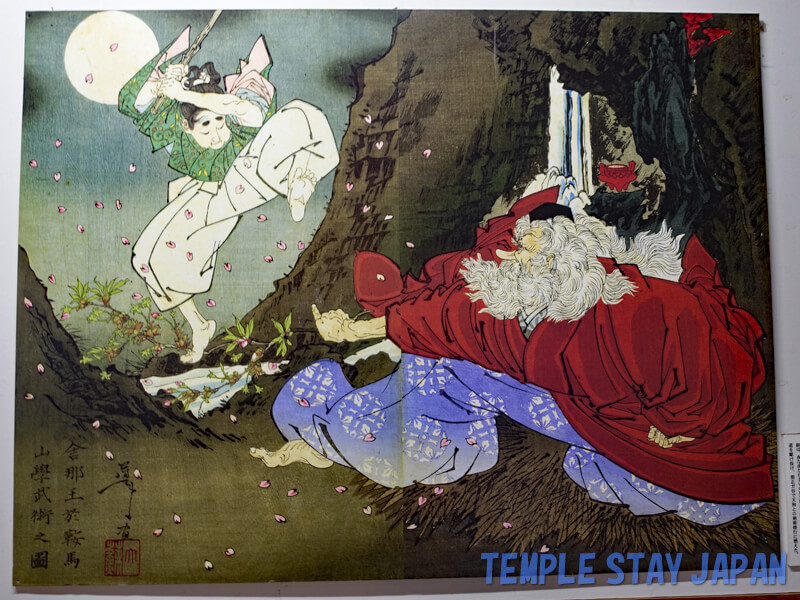
Subsequently, it was influenced by various teachings such as Buddhism, ancient Shinto, Onmyodo (Japanese esoteric cosmology), and Shugendo (mountain asceticism), and it unified these elements to become the head temple of Kurama Kokyo.
Highlights of Kurama-dera Temple
The main hall is filled with the power of the universe.
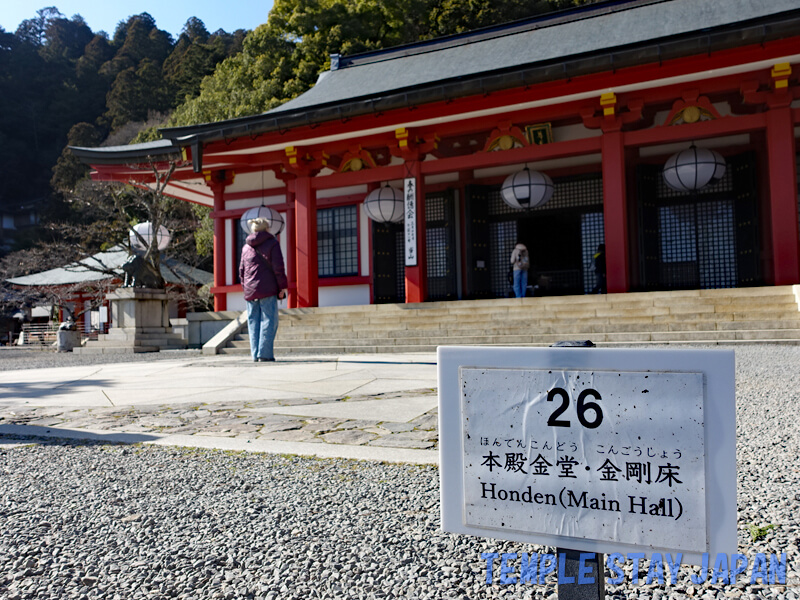
Kurama-dera Temple enshrines the spirit of the universe as its principal deity.
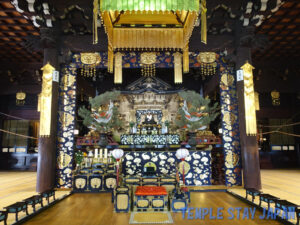
The main hall of Kurama-dera Temple enshrines the Thousand-Armed Kannon Bodhisattva (Sahasrabhuja), Bishamonten (Vaisravana), and the Goho-Maoson. The three deities represent the moon, sun, and earth. These are hidden statues, and are only unveiled once every 60 years.
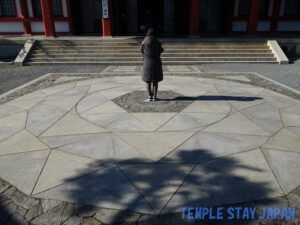
The plaza in front of the main hall, adorned with crests, is the place at Kurama Temple where you can receive the most blessings. It is said that if you stand in the center and spread both arms towards the sky, you will become one with the universe and your wishes will come true.
You can enter the main hall freely. They sell amulets and other items inside.
There is a dimly lit corridor underground. This place is also said to be filled with cosmic energy.
The Treasure Hall where you can see precious Buddhist statues
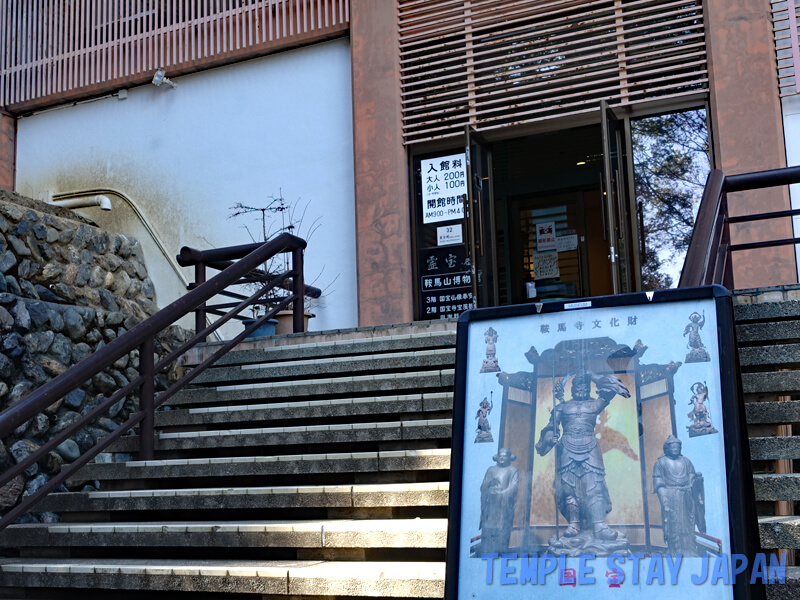
Inside the Treasure Hall, you can see the statue of Bishamonten (Vaisravana), which is designated as a National Treasure, and the statue of Sho Kannon Bodhisattva (Avalokitesvara), which is designated as an Important Cultural Property.
In addition, there are various other temple treasures and exhibits themed around the natural environment of Mount Kurama.
Tiger statues
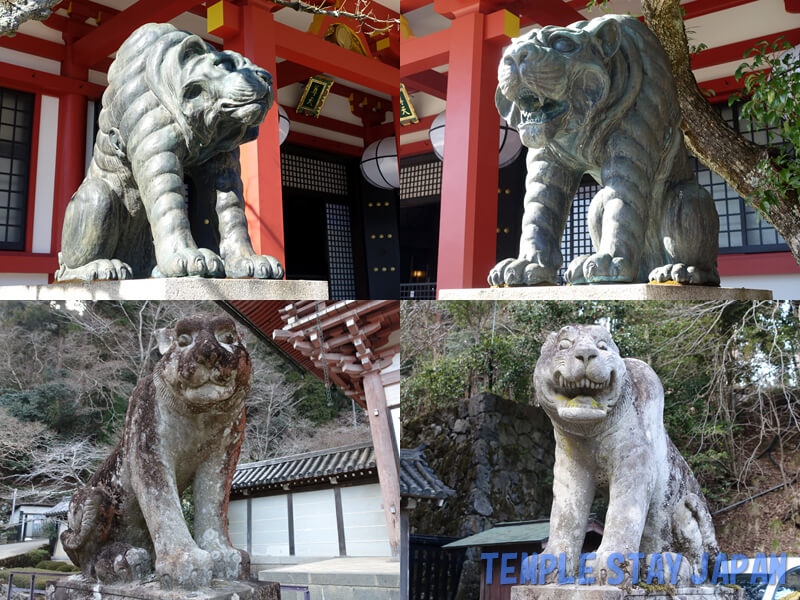
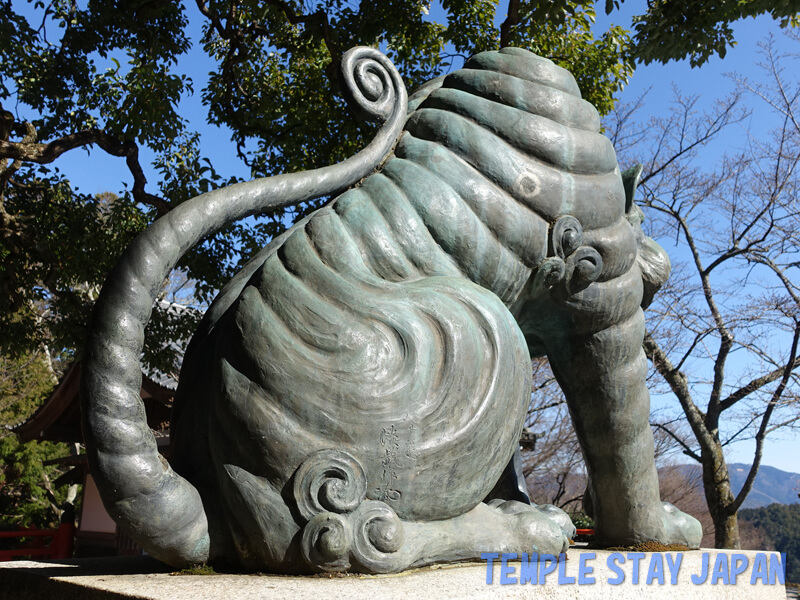
There are tiger statues in front of the Niomon Gate and the main hall. The tiger is a sacred animal considered to be a messenger of Bishamonten (Vaisravana).
When viewed from behind, its tail curls up, which is adorable.
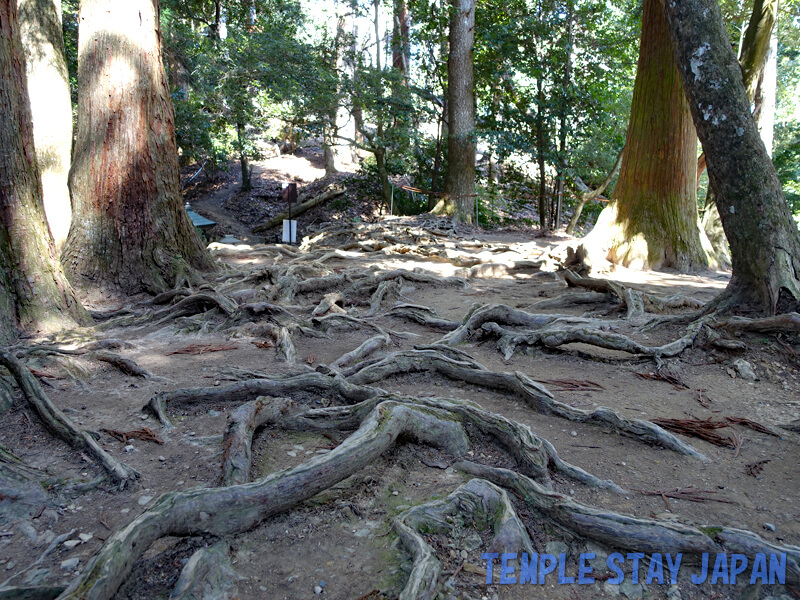
The path to the Okunoin
If you go further past the main hall and the treasure hall, you will find a mountain path that leads to the Okunoin. Because the bedrock in this area is hard, you can see a unique landscape where tree roots are exposed above ground.
It is said that Minamoto no Yoshitsune trained with tengu here.
And after crossing the mountain, you will arrive at Kifune jinja Shrine. It takes about an hour to walk from the main hall to Kifune jinja Shrine.
Three ways to pray at Kurama-dera Temple
Kurama-dera Temple has three special places for praying to deities and Buddhas. It’s the plaza in front of the main hall, the temple bell that anyone can ring, and the meditation area in the mountains.
Access to Kurama-dera Temple
The nearest station to Kurama-dera Temple is Kurama Station. In front of the station, there is a statue of a tengu with a large nose.
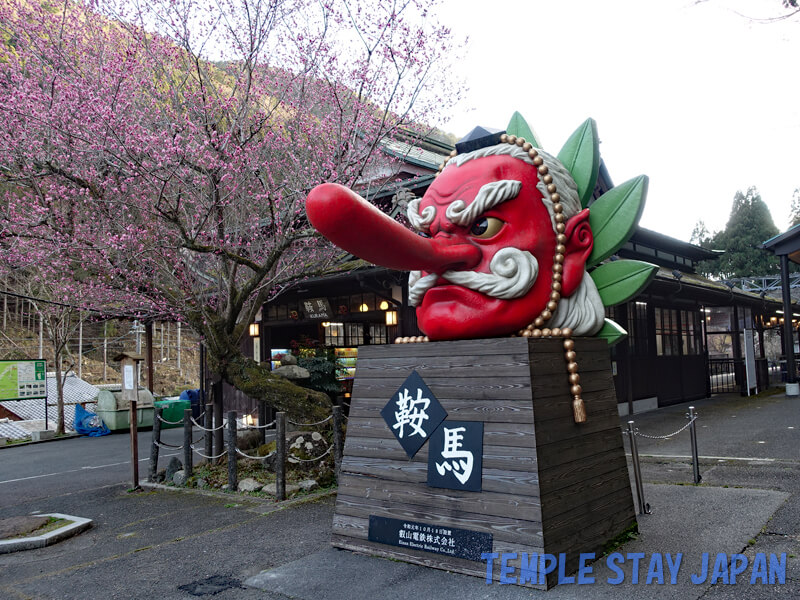
The Niomon Gate of Kurama-dera Temple is about a 3-minute walk from Kurama Station or Kurama bus stop.
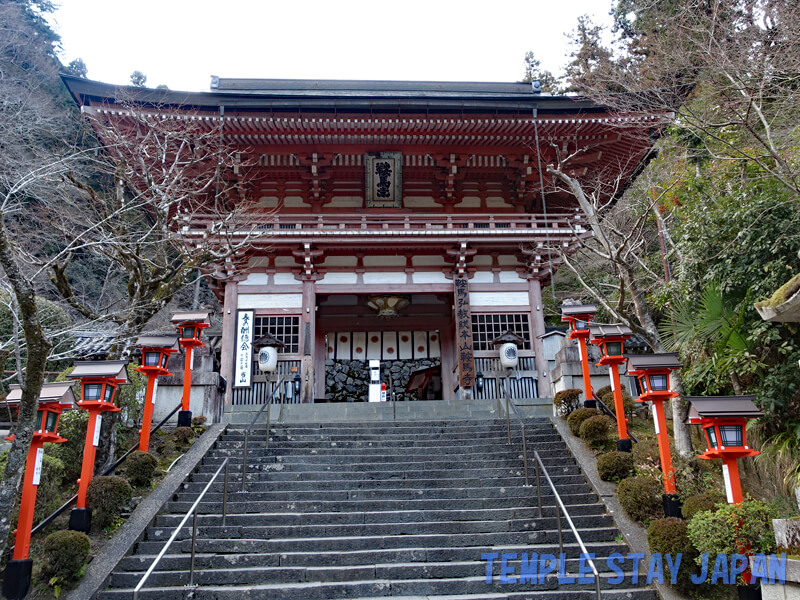
From there, it’s about a 30-minute climb up a slope and stone steps to reach the main temple.
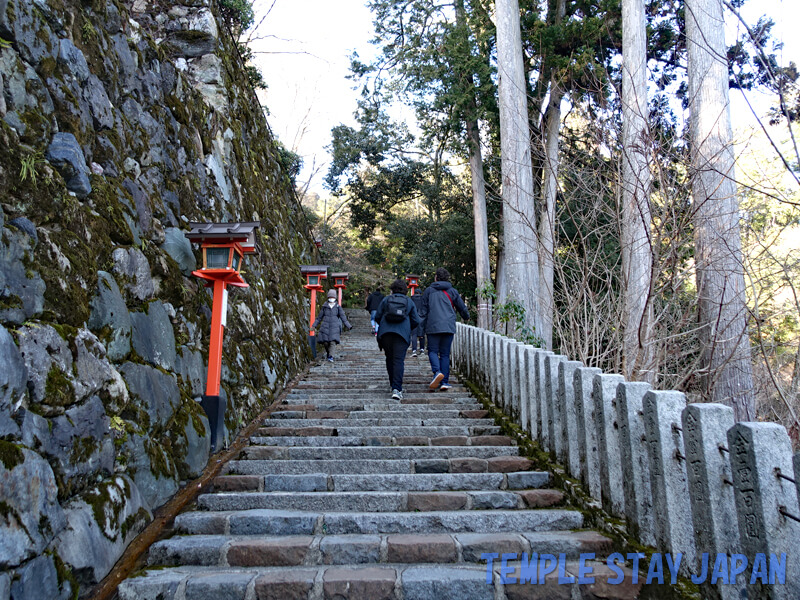
If climbing is difficult, there is also a cable car available. When you get off at the station on the mountaintop, you can see the Pagoda.