Higashi-Honganji
|
TEL : 075-371-9210(9:00 – 17:00) Address : Karasuma Shichi-jo Agaru, Shimogyo-ku, Kyoto Access : JR Kyoto Station > 7 minutes walk Parking : There is a parking lot Hours : Opning 5:50 – Closing 17:30 (March to October) / Opning 6:20 – Closing 16:30 (November to February) Entrance fee : free |
Introduction to Higashi-Honganji temple
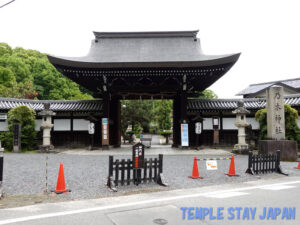
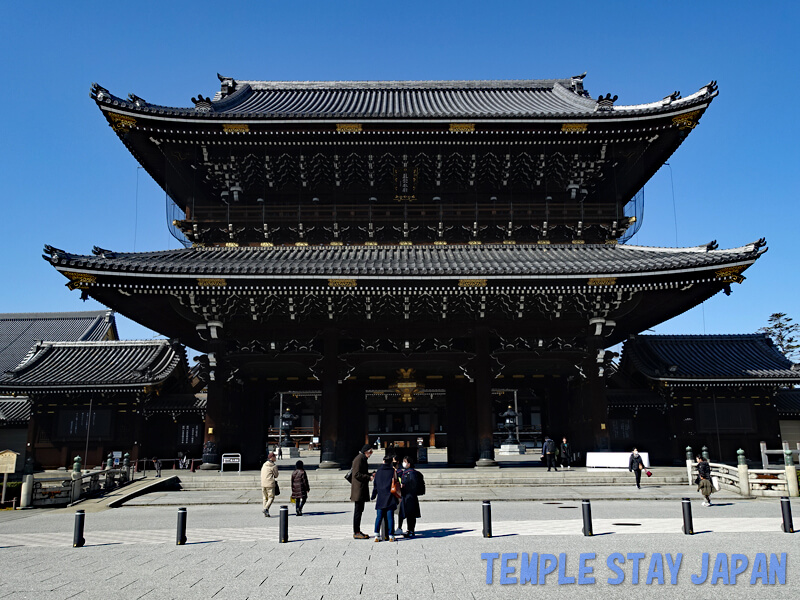
Higashi-Honganji is the head temple of the Jodo Shinshu Otani sect. The name of this temple means Honganji in the East. It is located very close to Kyoto Station. There are many buildings designated as important cultural properties within the temple grounds.
Morning service in the large temple hall
At Higashi Honganji Temple, services are held every morning from 7:00 AM in the Amida Hall and the Goeido Hall. No reservation is required. Anyone can attend by going to the temple at the scheduled start time.
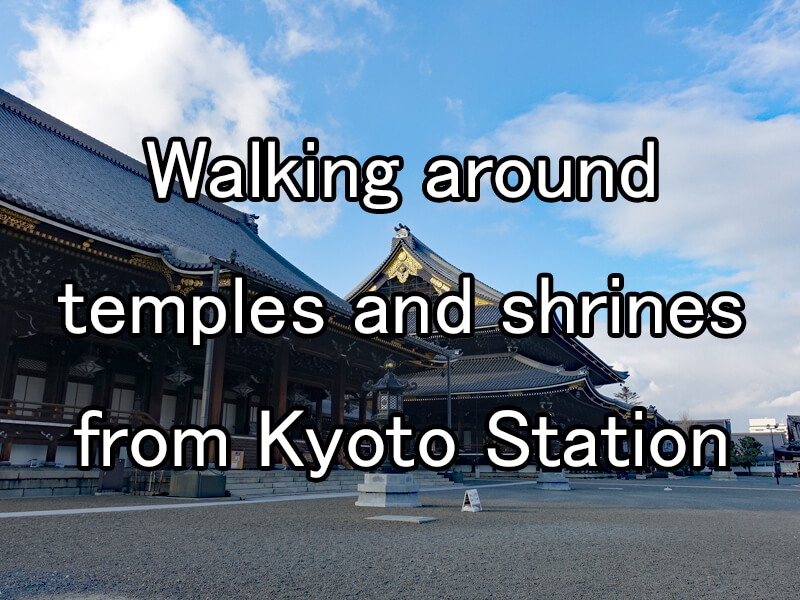
I woke up a little early and attended the service. As I entered the temple grounds, I saw two large halls standing side by side: the Goeido and the Amida-do. It was still dim before 7 a.m., and the atmosphere was different from that of daytime, with a certain grandeur.
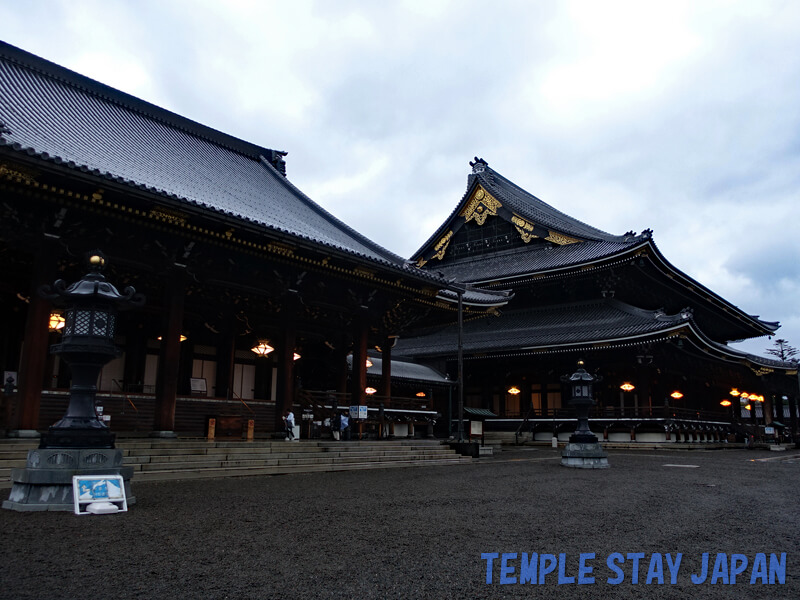
The service began in the Amida Hall. (It’s the hall on the left in the photo above.) Since many people come to pray, if you’re unsure which way to go, you’ll know by looking at them.
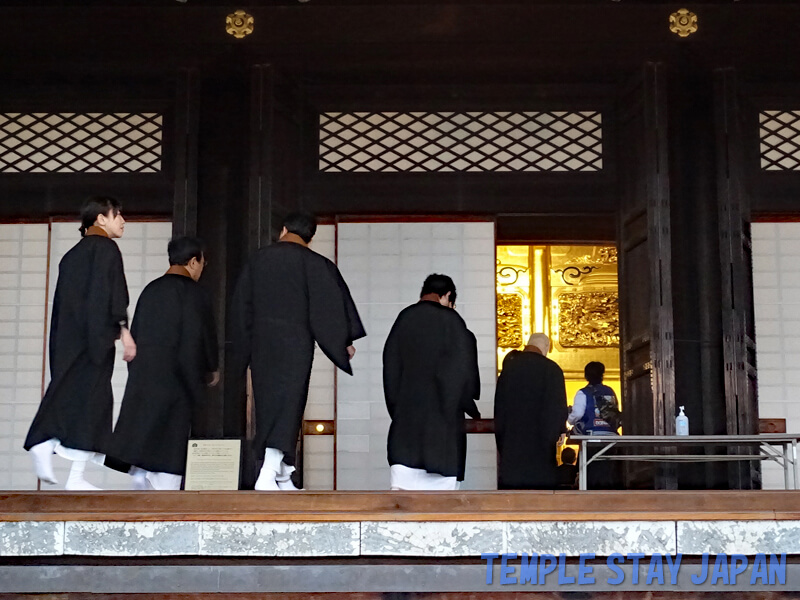
When I went there, the monks were lined up and entering the hall.
When I entered the Amida Hall, there were more than 100 worshippers inside.
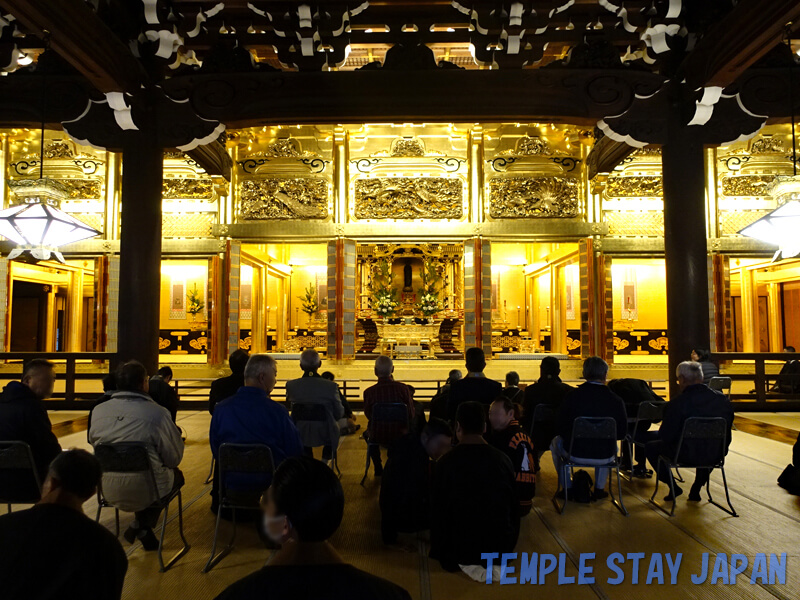
After waiting for a while, about ten monks entered the hall and sat in the inner sanctuary. Then the chanting began, but it ended after about 5 minutes.
After that, we hastily moved to the adjacent Goeido Hall. The two halls were connected by a wooden corridor, so we were able to walk between them.
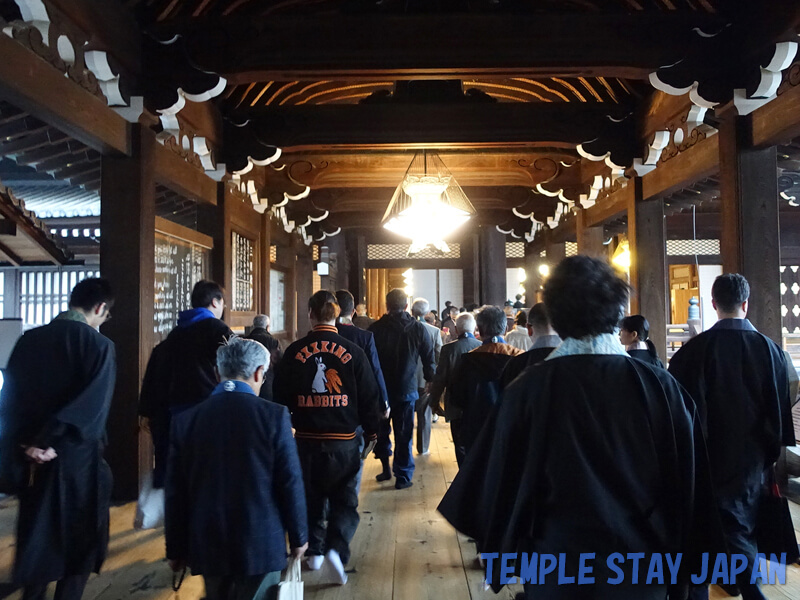
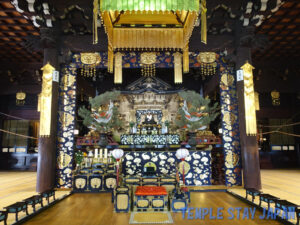
The Goeido Hall enshrines a statue of Shinran, the founder of the Jodo Shinshu sect of Buddhism. It is even larger than the Amida Hall and is the largest wooden building in Kyoto.
Photography is prohibited during service hours, so these photos were taken after the service ended. Many people were offering prayers in this space.
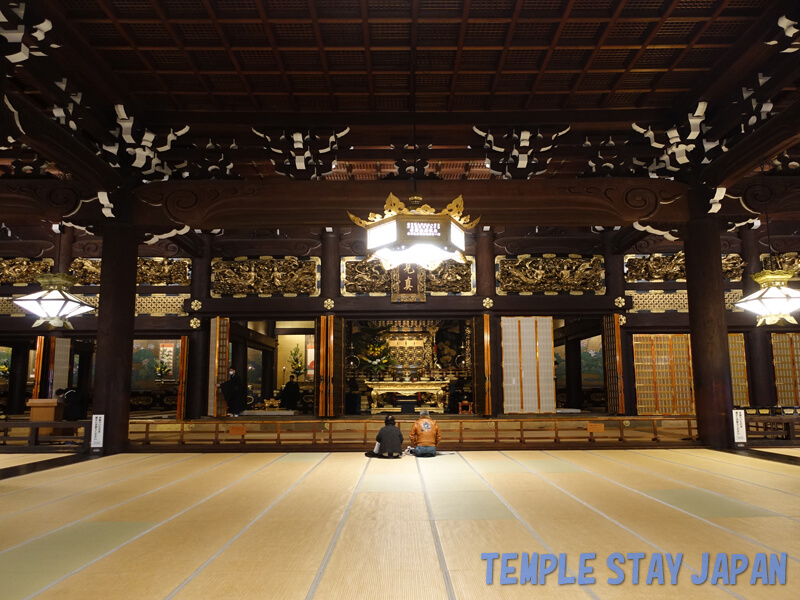
Upon entering the hall, I saw about 20 monks sitting in the inner sanctuary, and they began chanting sutras. The sound of bells echoed, and sutras were recited in a low voice with a rhythmic melody. During the part where “Namu Amida Butsu” was repeated, I also chanted along.
When the service was over, one of the monks came forward to the attendees and began to give a sermon. He said that encountering the teachings of Buddha helps one remember the desire to make others happy that everyone had as a child. (The sermon was in Japanese, but it was short, so even if you didn’t understand everything, it was fine to participate.)
It was 7:45 when everything was finished. The temple in the early morning was solemn and truly wonderful.
Map