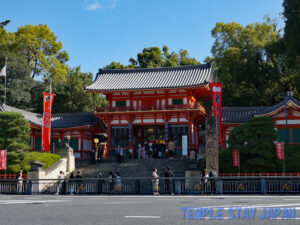
Bukkoji
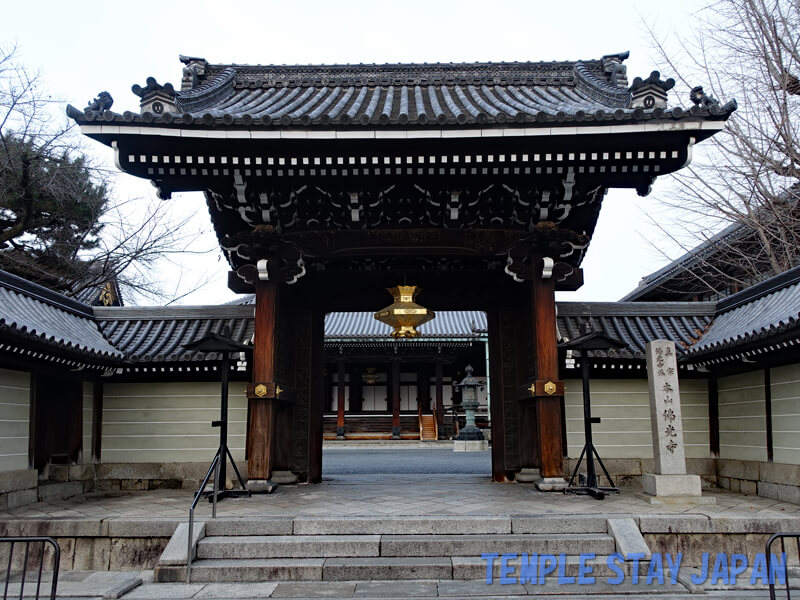
|
TEL : 075-341-3321 Address : 397 Shinkaicho, Shimogyo Ward, Kyoto Access Karasuma Subway Line Shijo Station Exit 5 > 2 minutes walk Hours : Opning 6:00 – Closing 16:00 / 18:00 (cafe) Entrance fee : free |
Introduction to Bukkoji temple
This is the head temple of the Shinshu Bukkoji sect. It is said that the temple originated from a hermitage built in Yamashina by Shinran, who had been exiled to Echigo Province (present-day Niigata Prefecture) and returned to Kyoto.
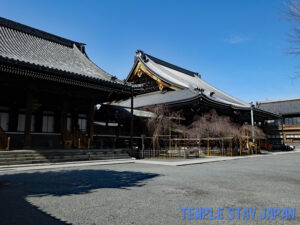
Within the temple grounds, the Daishi Hall and the Amidado Hall stand side by side, and there are also cafes and shops.
Morning service
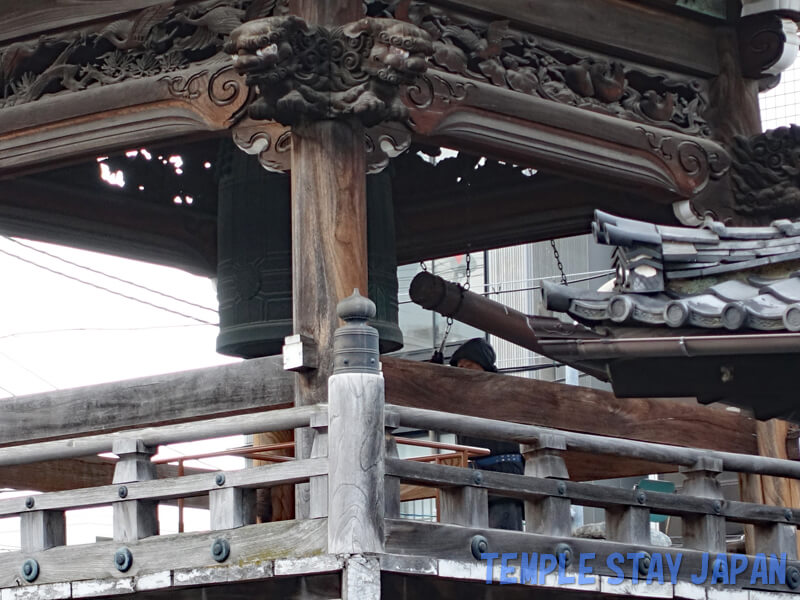
At Bukkoji Temple, morning services are held every day starting at 7:00 AM. When I arrived at the temple at 6:50 a.m., a monk was ringing a large bell. Although it was difficult to see them clearly, a beautiful, calming sound echoed throughout the temple grounds.
Of the two halls side by side, I entered the Amida Hall, which was on the left. A statue of Amitabha was enshrined at the front, and the pillars and transoms shone with a golden gleam. The transoms were carved with images of immortals, elephants, and tigers, making them a pleasure to look at.
Inside the hall, the monks were busy preparing for the service.
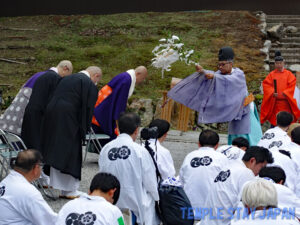
As I sat and waited, four monks came in and the service began. The sound of a bell rang out from outside, and we all chanted “Namu Amida Butsu.”
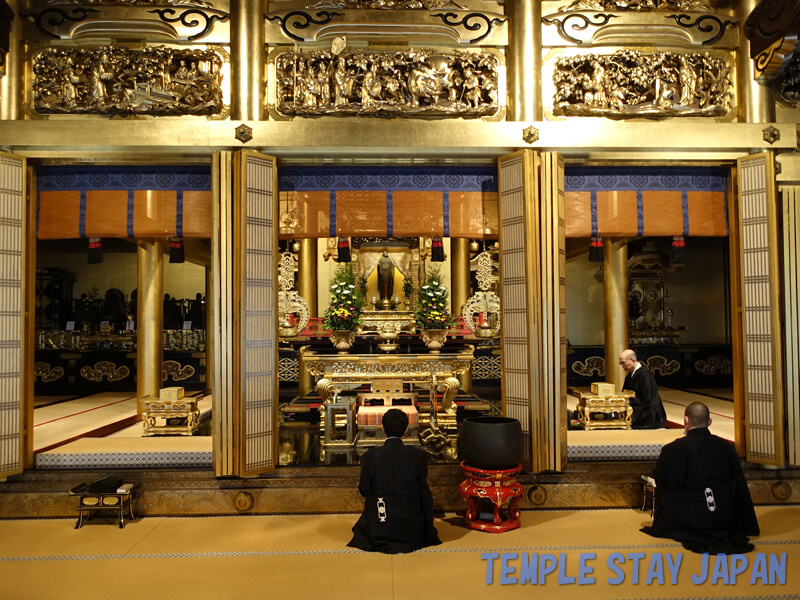
The chanting was very fast-paced and pleasant to listen to. The service finished in about 15 minutes, and then we all moved to the adjacent Daishi hall.
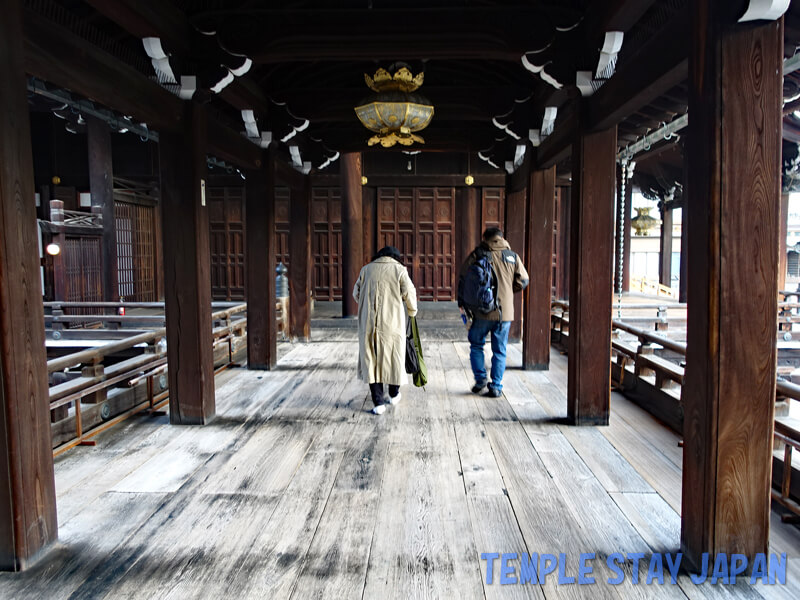
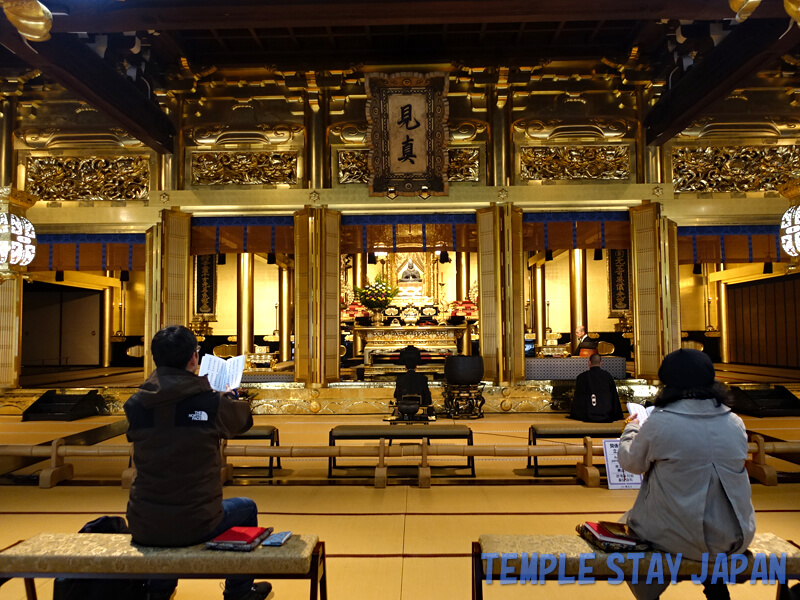
The Daishi Hall was even larger than the Amida Hall. In the center was a statue of Shinran, the founder of the Jodo Shinshu sect of Buddhism.
Here, the monks chanted sutras with a melody.
Buddhist sermon
At 7:30, there was a sermon by a Buddhist monk in the building across from the Daishi Hall. The service at the Daishi hall was still ongoing, but I left midway through to participate in it.
There was a sign at the entrance that said you could enter freely.
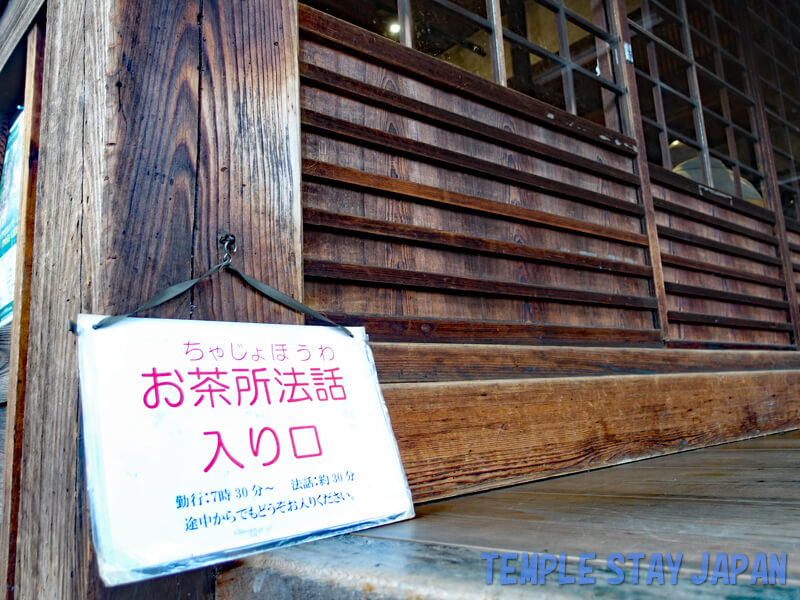
Inside was a Japanese-style room with chairs lined up, and a monk was chanting sutras. Then the sermon began at around 7:45. When I attended, they talked about the history of Buddhist altars.
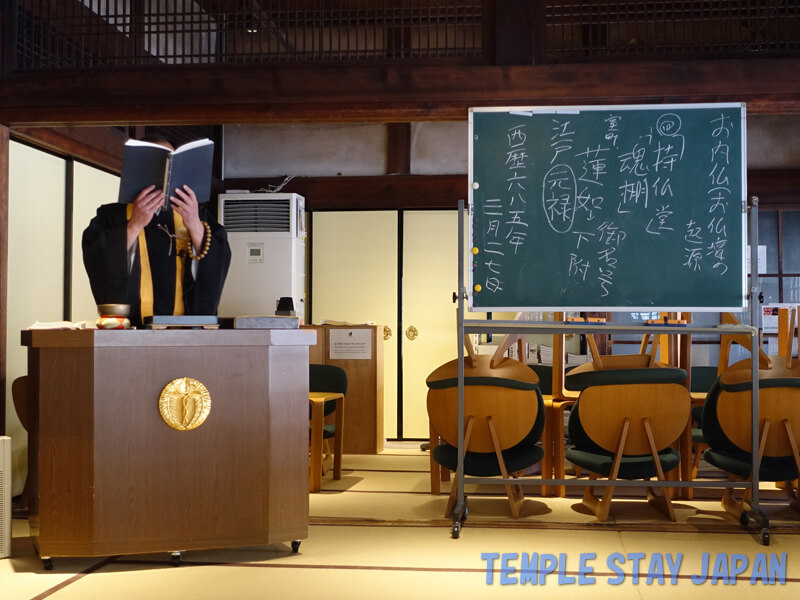
Its origins lie in temples in India, which consisted of altars made of earth with roofs added over them. Therefore, a Buddhist altar is said to be like a small temple.
This sermon was delivered in Japanese. Therefore, it might be a little difficult for people who don’t understand Japanese to participate. In that case, I recommend participating only in the services at the Amida Hall and the Daishi Hall.
Map