There are a variety of experiences you can have at a temple stay. Here we will introduce some representative Buddhist and Shinto experiences. Please use this as a reference when choosing a temple stay.
Buddhist and Shinto experiences at a temple stays
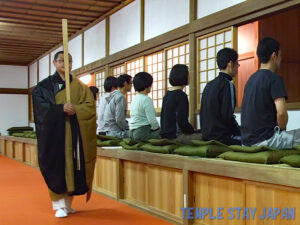
Morning service
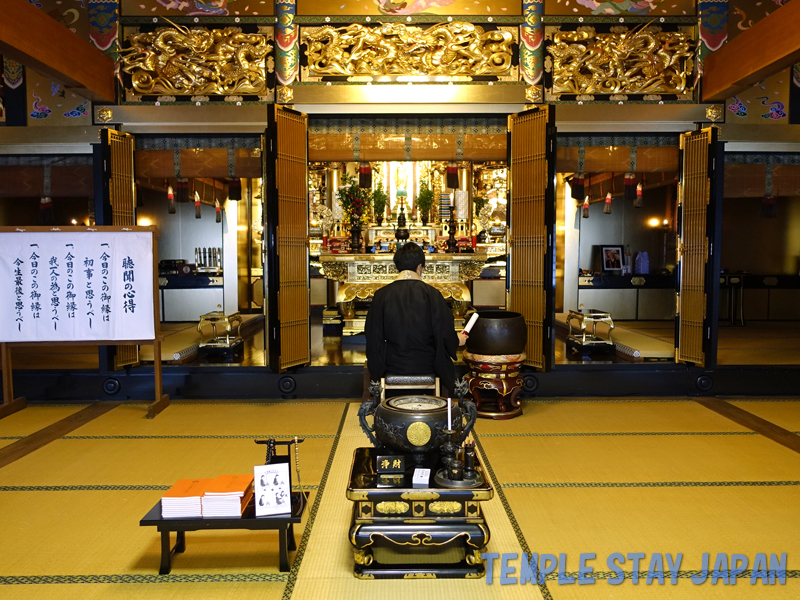
Many temples and shrines hold services early in the morning. If you stay at a temple stay, you can attend these events.
Morning service is a ritual that marks the beginning of the day. At temples and shrines, sutras and prayers are chanted to express gratitude for life, good health, good fortune, and other wishes. It is also a morning greeting to the Divine being and Buddha.
The early morning air is more invigorating than usual. If you stay at a temple stay, be sure to attend the morning service.
Zazen (Zen meditation)
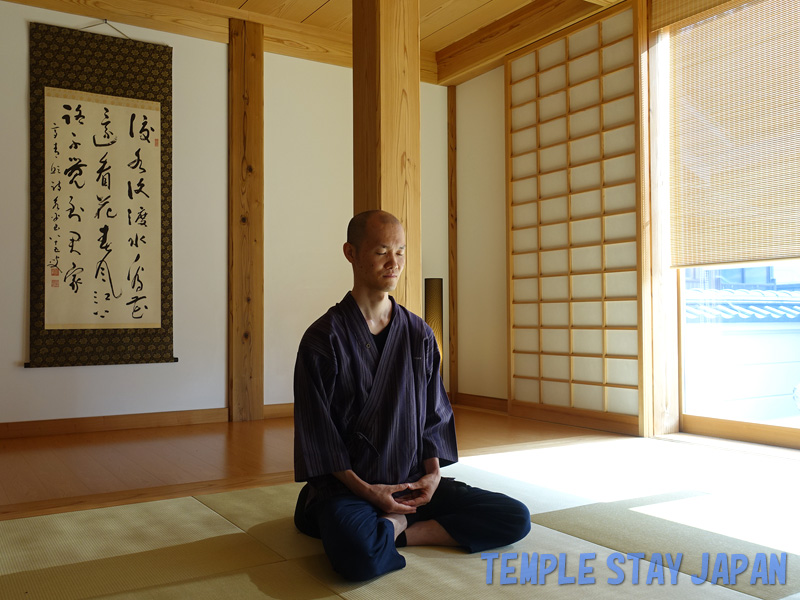
Zazen (Zen meditation) is a form of training that is mainly practiced in temples of the Zen sect (Soto, Rinzai, and Obaku) and Tendai sects.
It is said that zazen harmonizes the mind by regulating posture and breathing. Even beginners can easily experience it at a temple stay.
Ajikan meditation
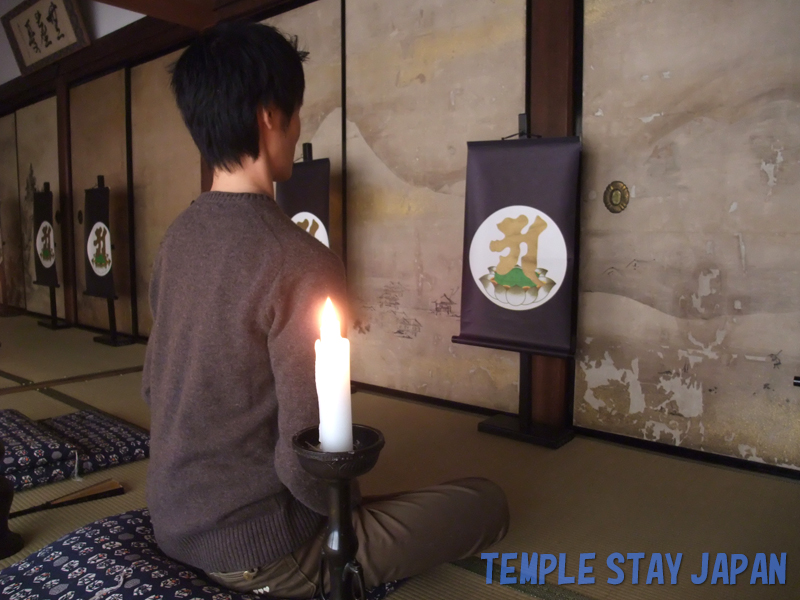
Ajikan is a form of meditation practiced in Shingon Buddhist temples. The sitting position is similar to that of zazen, but a hanging scroll with the moon and Sanskrit characters painted on it is placed in front of you.
While Zazen aims to empty the mind, Ajikan aims to fill the mind with positive images. By straightening your spine and breathing slowly, you will feel refreshed.
Copying sutras
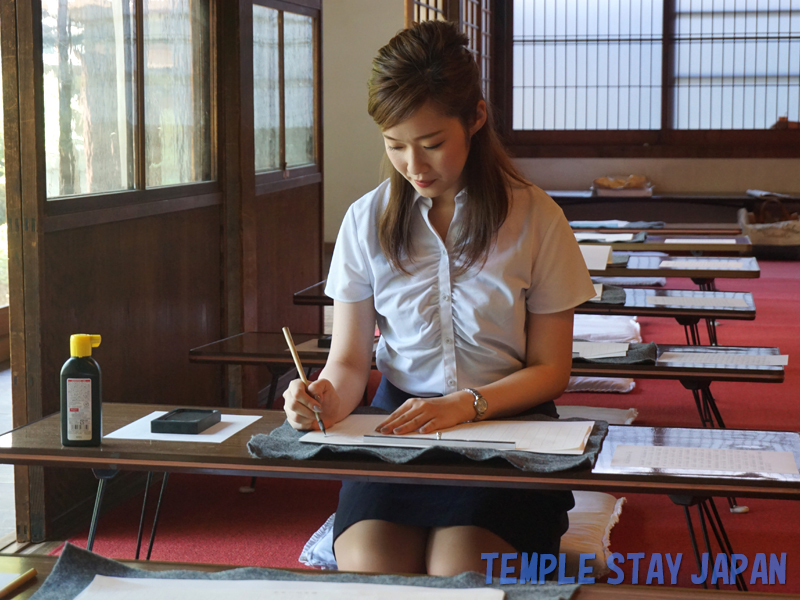
In the days before printing technology, the only way to increase the number of sutras was to copy them. In modern times, writing sutras is considered to be a form of spiritual training and is believed to bring merit.
The most commonly used sutra for copying is the Heart Sutra. There are 262 characters in total. Once you’ve finished, write down your wish and offer it to Buddha.
Copying Buddha
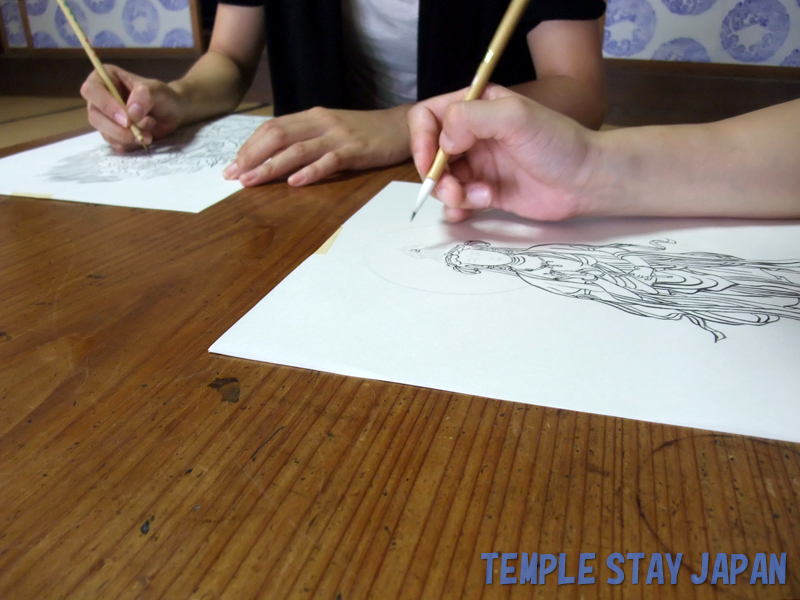
This is a training to paint pictures of Buddha. The typical method is to trace a lightly drawn model with a brush.
The Buddhas that are copied vary depending on the temple, including Amitabha, Avalokitesvara, Ksitigarbha, and Acalanatha. Just like copying sutras, merit is gained by copying them.
Waterfall training
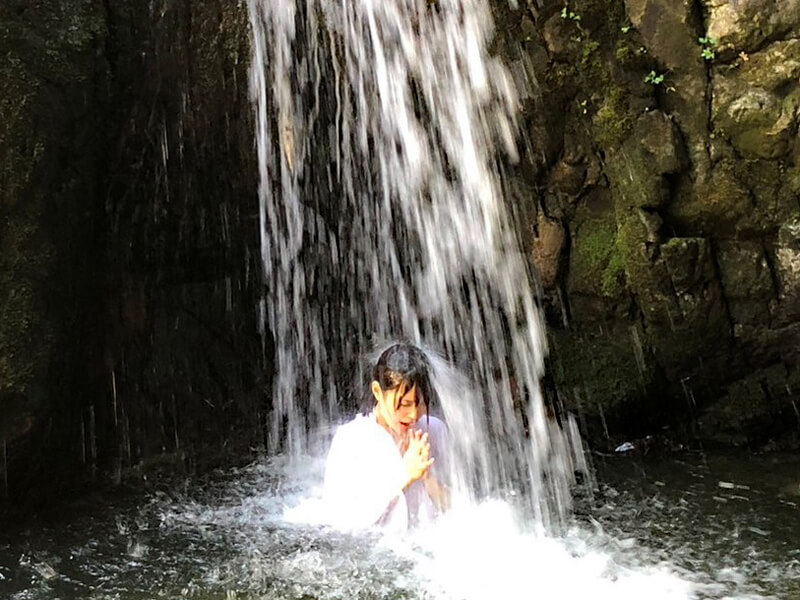
There are only a few temples and shrines in Japan where you can experience waterfall training. Still, it’s an experience worth trying.
Waterfall training can be broadly divided into two purposes: purification and training. In Japan, water has been believed to have the power to eliminate evil since ancient times. In Shugendo, it is said that being hit by a waterfall gives you the power to become one with the Divine being, Buddha, and nature.
Natural waterfalls are cold even in summer, so be sure to listen carefully to your instructor’s warnings.
Water practice
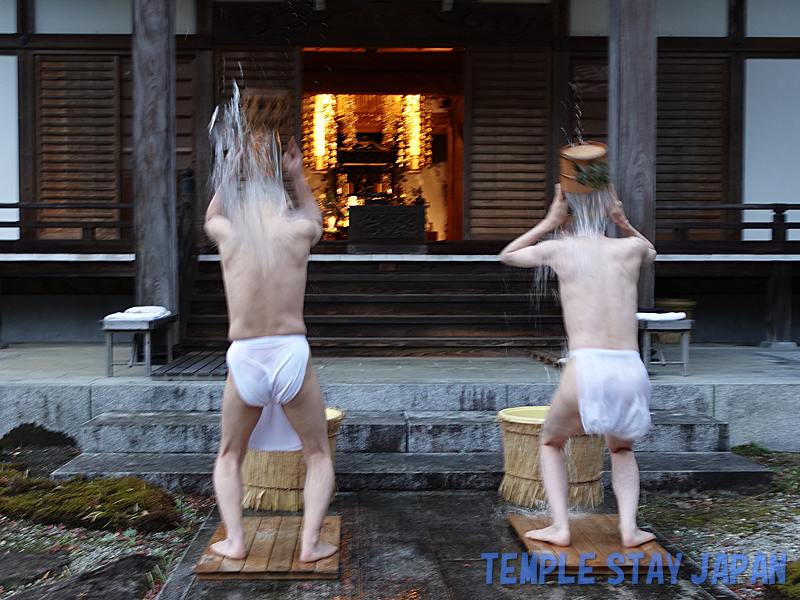
Nichiren Buddhist monks practice pouring water over themselves seven times a day in the middle of winter. There are temple stays where even beginners can experience this water practice.
Chant a sutra and pour water over yourself all at once. Repeating this process many times will purify your body and mind.
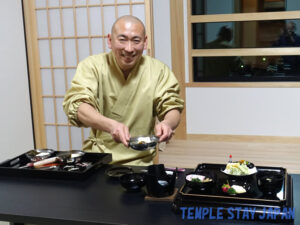
Shojin (Buddhist vegetarian) cuisine
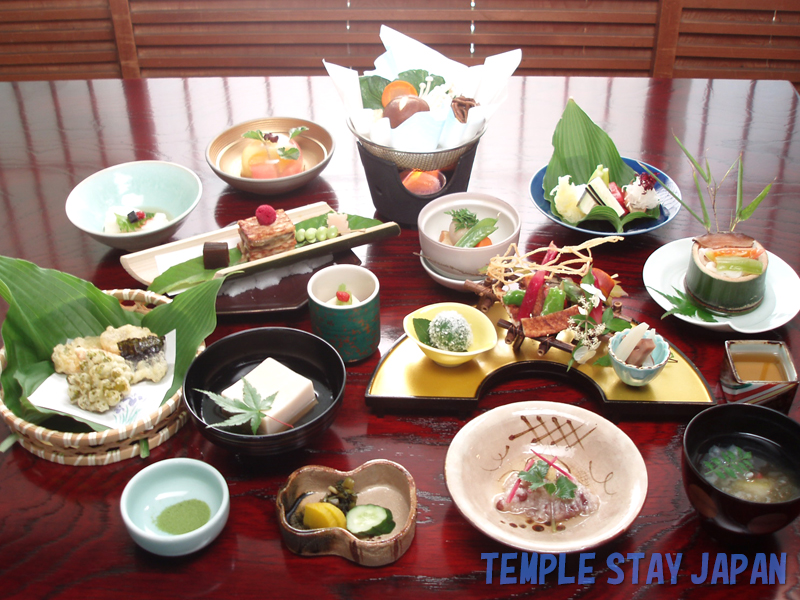
Shojin cuisine is a meal that reflects the spirit of Buddhism. In keeping with the teachings that prohibit killing, no meat or fish is used. In order not to interfere with the training, vegetables with strong odors such as garlic and chives are not used. To avoid waste, cook vegetables with the skin peeled.
Shojin cuisine also emphasizes the importance of approaching cooking with ambition. As a result, many original dishes are created that are carefully crafted despite the many restrictions.
Work in a temple
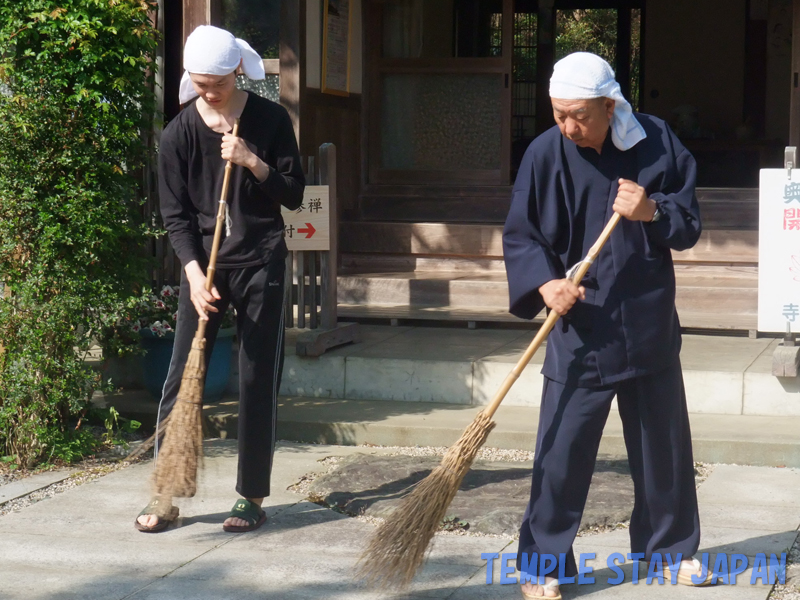
Monks perform everyday tasks such as cooking, farming, and carpentry as part of their Buddhist training. The most prominent of these is cleaning.
At temple stays, cleaning is sometimes included as part of the program as an experience to look into the soul.
Pilgrimage
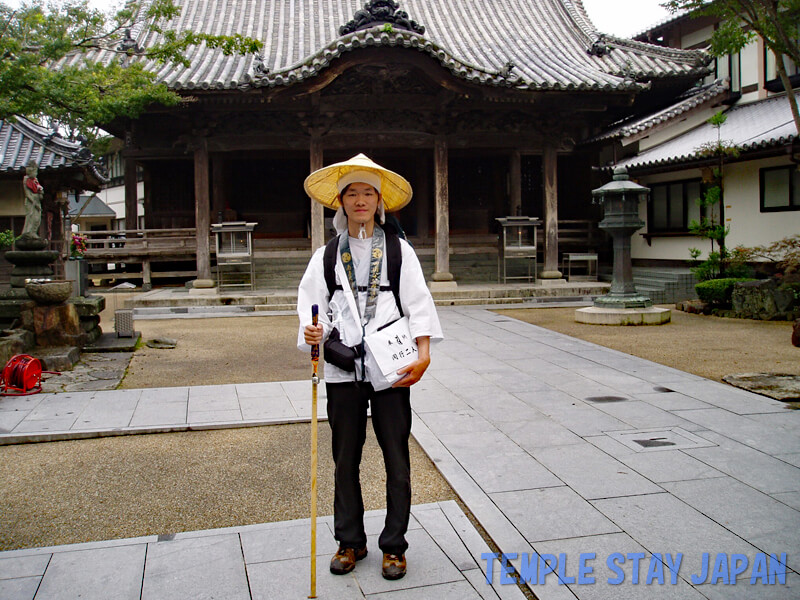
There are pilgrimage courses that involve staying at multiple temple stays. The most famous is the 88 sacred sites of Shikoku.
Pilgrims wear white robes, hats, and walk to the temple with walking sticks.