
Koyasan
|
TEL : 0736-56-2011 Address : 132 Koyasan, Koya, Ito District, Wakayama Access : Nankai Koya Line Gokurakubashi Station > (Nankai Koyasan Cable) > Koyasan Station Parking : There is a parking lot |
9 popular spots in Koyasan
Koyasan is a sacred place of esoteric Buddhism founded by Kobo Daishi over 1,200 years ago. It is a Buddhist city surrounded by mountains over 1000 meters high. There are 117 temples in the city, 51 of which operate temple stays.
The most important sites on Koyasan are Danjo-Garan and Okunoin (Mausoleum of Kobo Daishi). If you are going for the first time, be sure to check out these two sites. Kongobuji Temple also has many attractions.
For other sites, we recommend that you decide your destination based on your interests and time. Here we will provide a brief overview of each.
Danjo-Garan
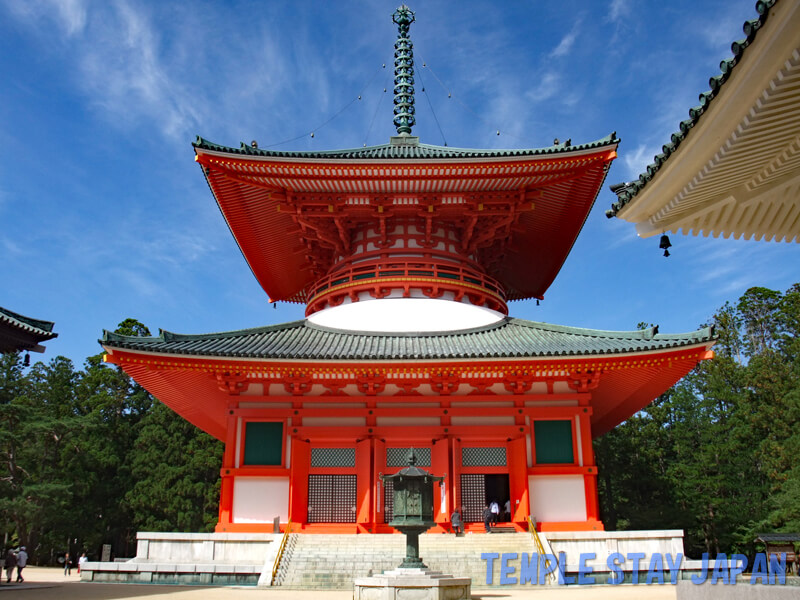
Danjo-Garan was the first place developed as a training hall when Kobo Daishi founded Koyasan. For this reason, there are many halls that play important roles.
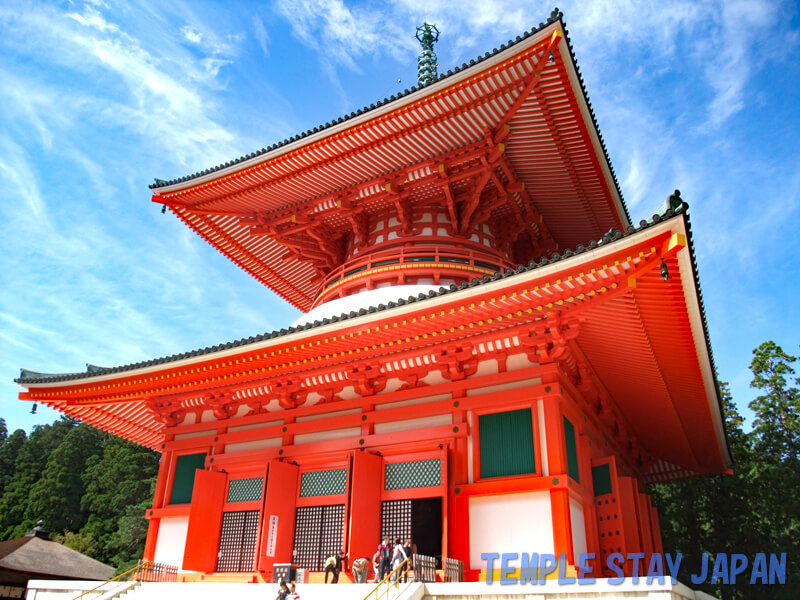
The most eye-catching of these is the Konpon-Daito (Large pagoda), a vermilion two-story roof. This pagoda is said to have been built between 816 and 887.
The nearby Kondo Hall has long been considered the main hall of Koyasan. Many of the important events at Koyasan are held in this hall.
A total of 11 halls, including these two, have been designated as Important Cultural Properties.
Okunoin (Mausoleum of Kobo Daishi)
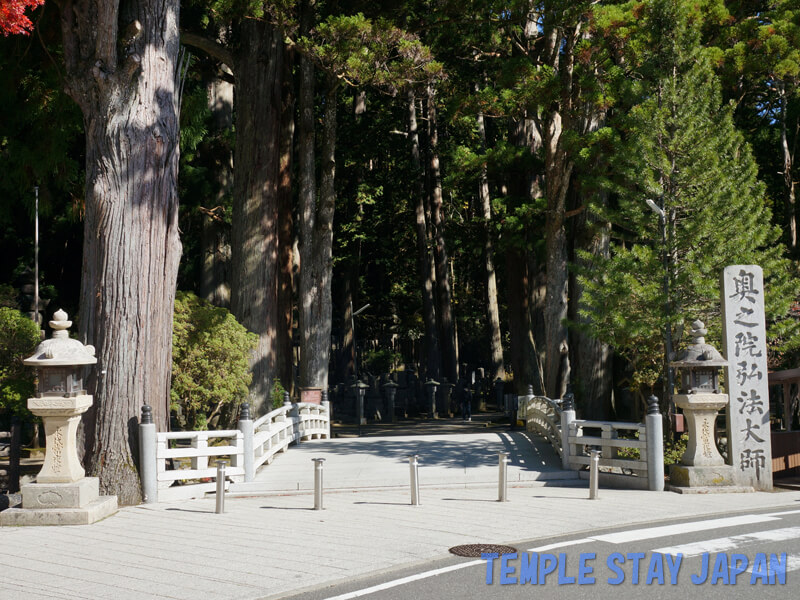
Okunoin is the most important place in Koyasan. Kobo Daishi, who founded Koyasan 1,200 years ago, is said to still be living here. His mausoleum is at the very back, and meals are delivered there every day by monks.
Along the approach to the mausoleum, there are 200,000 graves and memorial towers. Among them are the graves of famous Japanese warlords from the period of the warring states, such as Oda Nobunaga, Takeda Shingen, and Uesugi Kenshin.
Kongobuji Temple
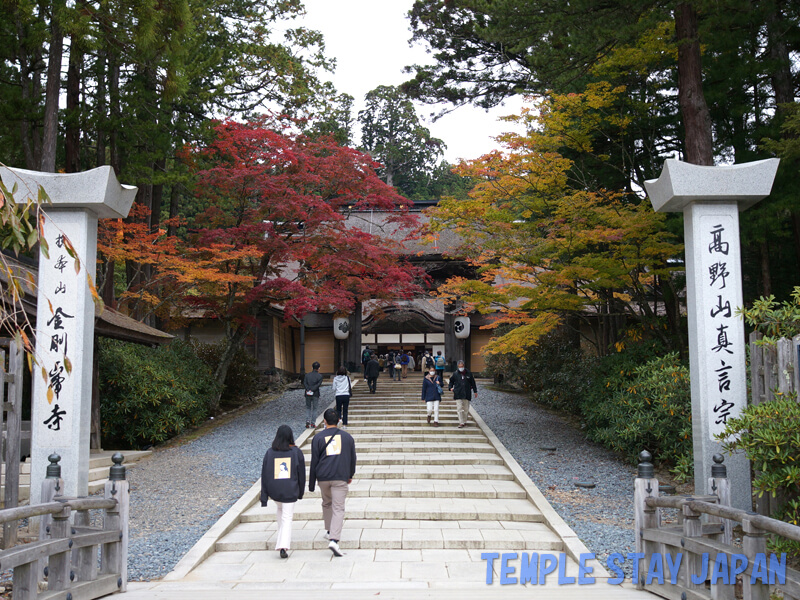
Kongobuji Temple is the head temple of the Koyasan Shingon sect.
Within the temple grounds, there are 12 halls designated as Important Cultural Properties, including the main hall, gate, sutra storehouse, and bell tower. It also has one of Japan’s largest rock gardens and sliding screen paintings by many artists.
Koyasan Reihokan Museum
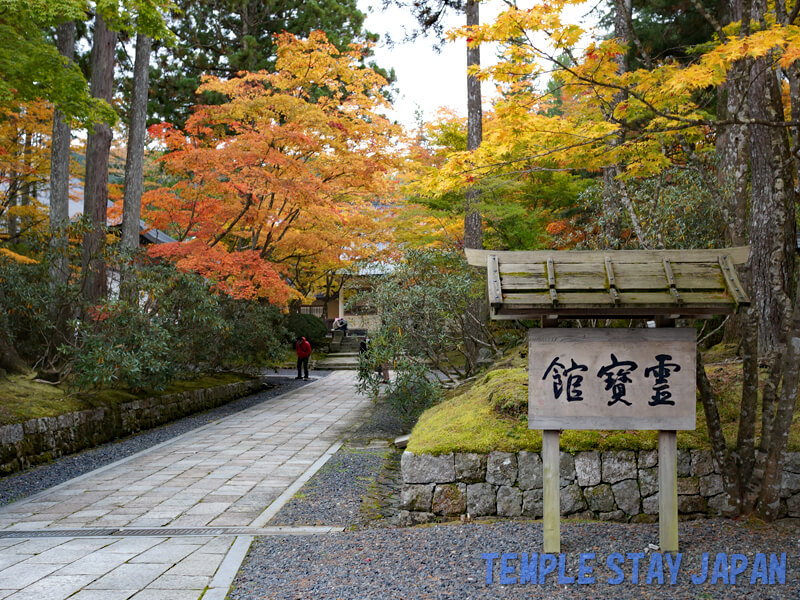
Koyasan has a long history and is home to a great number of cultural assets. The Koyasan Reihokan Museum was built for the purpose of preserving and displaying these treasures. Currently, the museum houses a total of 100,000 cultural assets, including 21 national treasures and 148 important cultural properties.
There are particularly many Buddhist statues. The statues of the Eight Great Children, created by Unkei and designated as a national treasure, are a must-see. Time flies when you’re here.
Great Gate
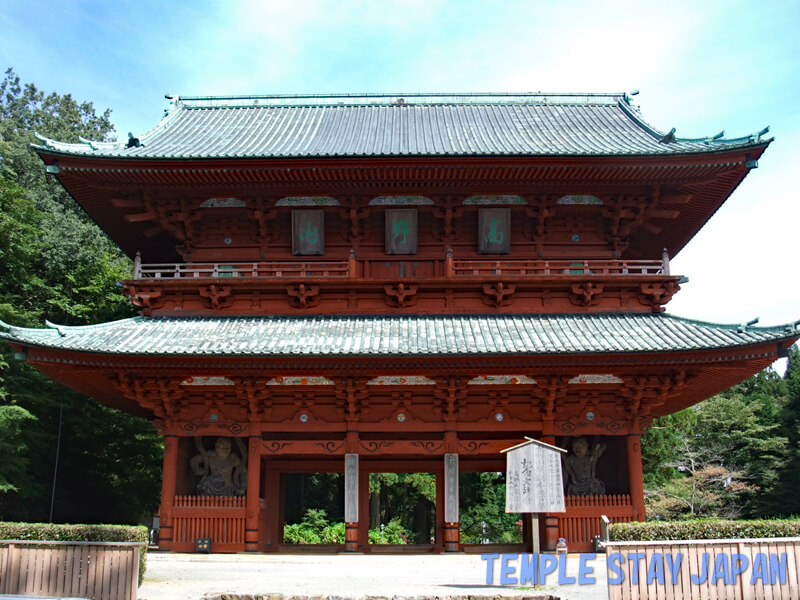
This is a large gate located to the east of the town of Koyasan. It was built in 1705 and is 25.1 metres (82.35 ft) high. Deva king statues are placed on both sides as if to protect Koyasan.
In the past, travelers entered the town through this gate. Koyasan is located on top of a mountain, so people who have walked up to it must have been very impressed to see this gate.
Nyonindo (Women’s prayer hall)
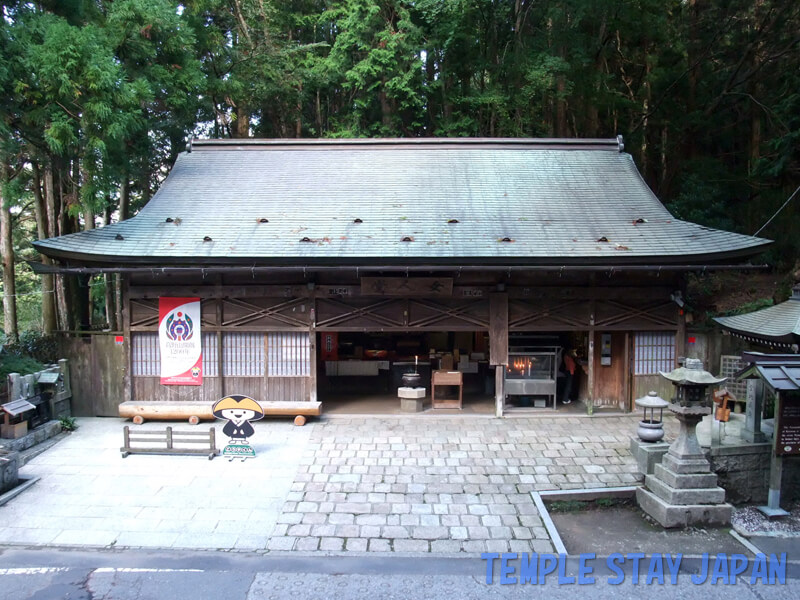
Koyasan was once a place where women were not allowed to enter. For this reason, a prayer hall for women was established at the entrance to the town. This hall is the last one still standing.
It is difficult to understand in modern times why women are not allowed inside a temple. You can feel their desperate prayers, even if they can’t enter the temple.
Daishi Kyokai hall
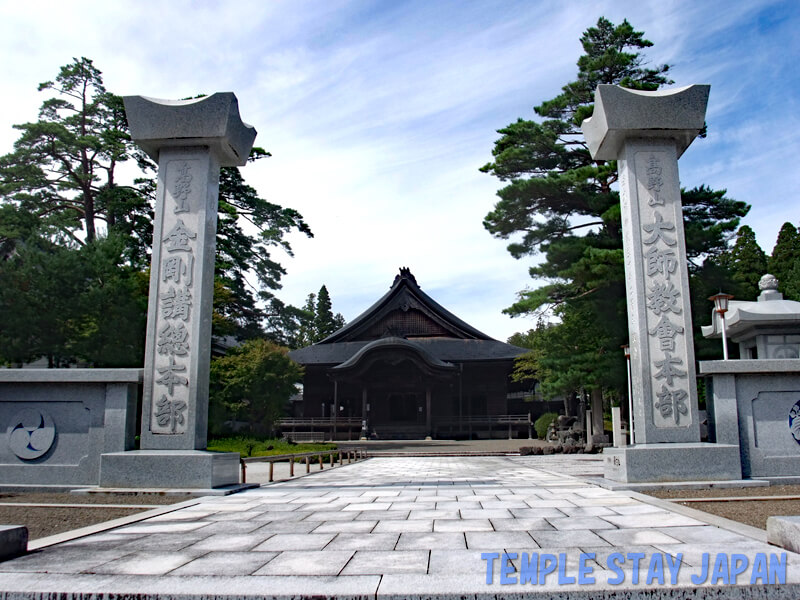
This is a facility in Koyasan where various training sessions are held. You can participate in a ceremony where a monk gives you Buddhist precepts that prohibit killing, stealing, lying, etc.
It is held seven times a day and takes 30 minutes. The teachings given quietly in the pitch-black hall are refreshing.
Karukaya-do hall
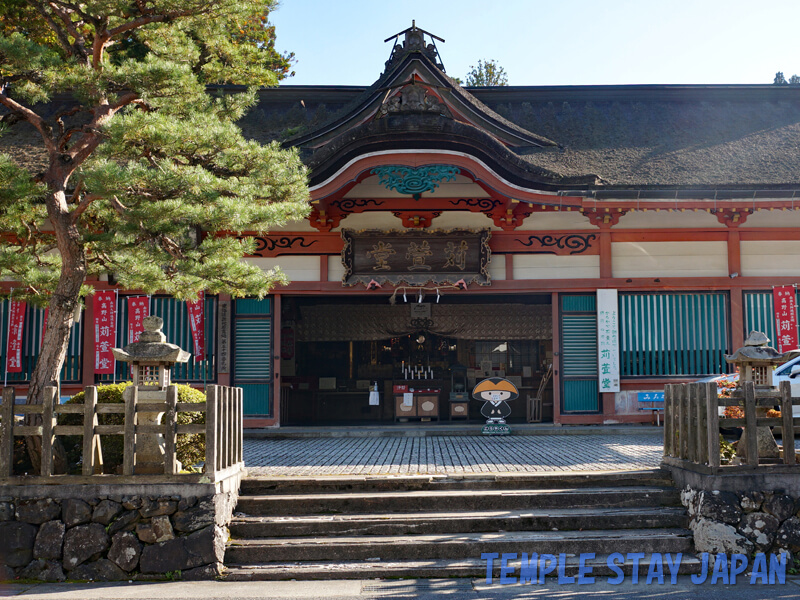
This hall tells the story of Karukaya Doshin, who trained with his son without revealing that they were father and son. You can really feel the strictness of the monks.
It doesn’t take much time, so be sure to check it out.
Tokugawa family mausoleum
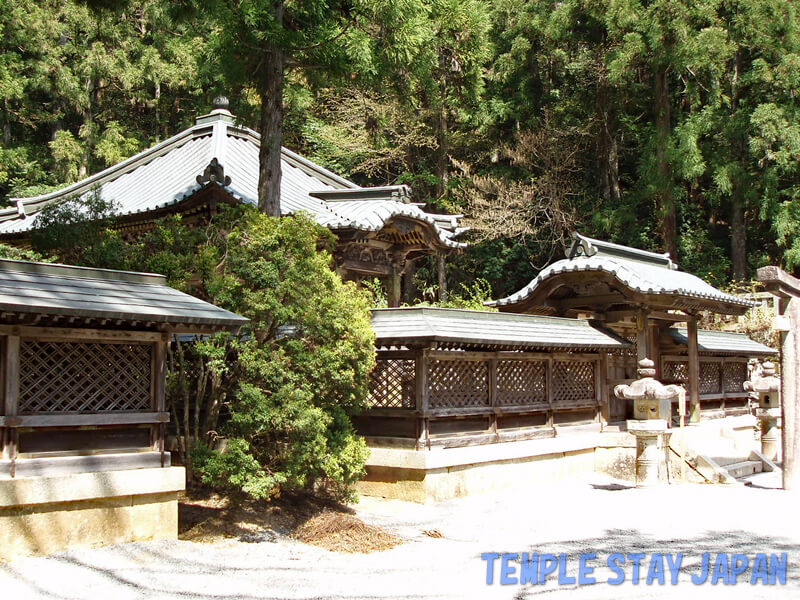
This is the mausoleum of the Tokugawa Shogunate, who ruled Japan for a long period of time. The first shogun, Ieyasu, and the second shogun, Hidetada, are enshrined here.
Although it is small, it is decorated with beautiful carvings that are unique to the Tokugawa Shogunate.