Mangyoji
|
TEL :0838-22-4073(9:00~17:00) Address :268 Hiyakomachi, Hagi, Yamaguchi Access :JR Sanin Main Line Higashihagi Station > (bus) > Hagi Shoko High School bus stop > 1 minutes walk Parking :There is a parking lot Time :Check-in 15:00 Check-out 10:00 Room :1 to 4 people (one group per day) Shukubo stay without meals 6,930 ~ 9,900 yen (Monday to Thursday) without meals 8,030 ~ 11,000 yen (Friday, Saturday and Sunday) Elementary school student 4,400 yen breakfast 1,000 yen (Reservation required at least 3 days before your stay) |
Shukubo (temple stay)
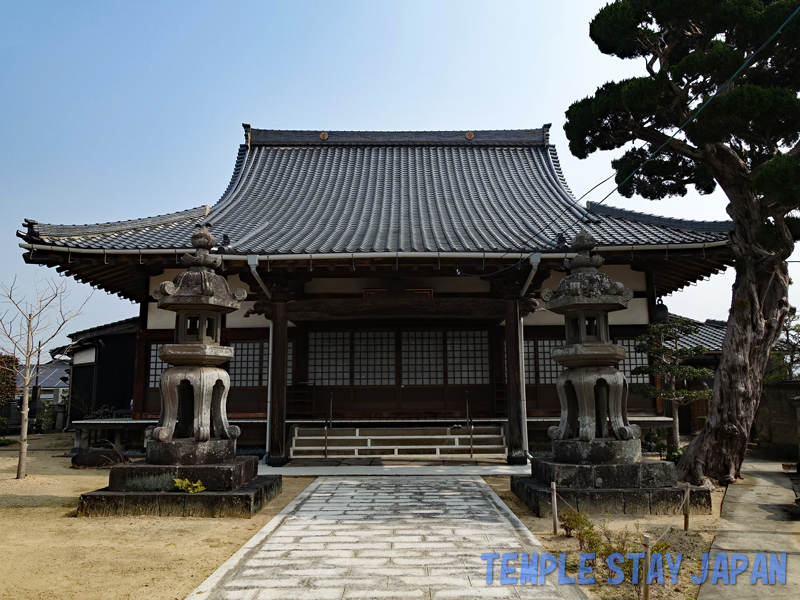
Mangyoji Temple was built in this place in 1605. Nearby is the city of Hagi, where many important figures in Japan’s modernization were born. It is also a popular tourist destination.
Shukubo is a lodging facility that was renovated from a temple building.
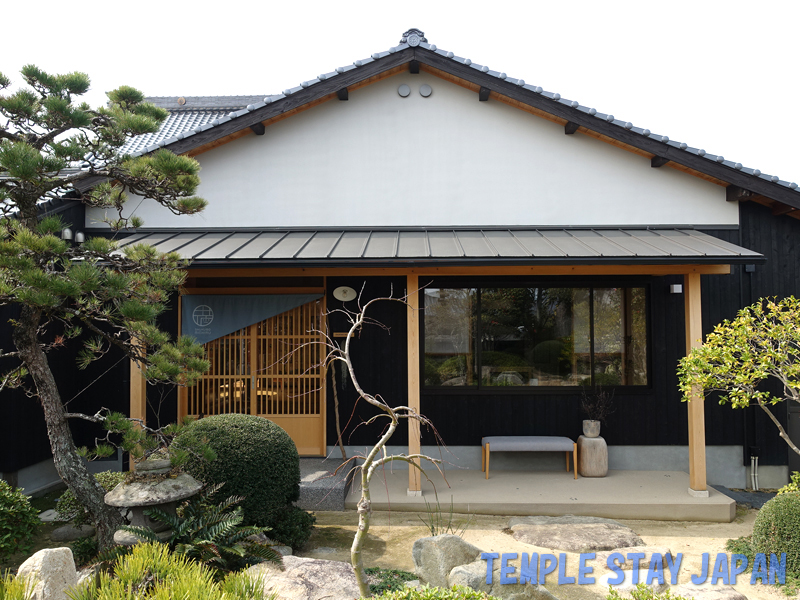
Entering through the entrance, there are three Japanese-style rooms with washbasins and baths. The toilets are shared with worshippers. However, I don’t think many people would use it unless it was a special occasion.
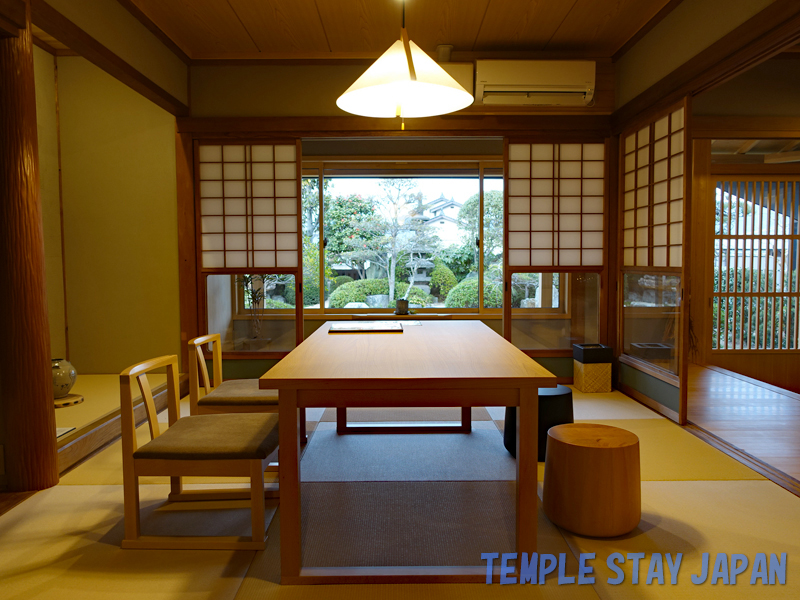
The first room was a beautiful Japanese-style room with a painted tokonoma alcove. A statue of Amitabha was enshrined here. The large windows overlooked the garden. There was a wooden table in the center, and it was a cozy space.
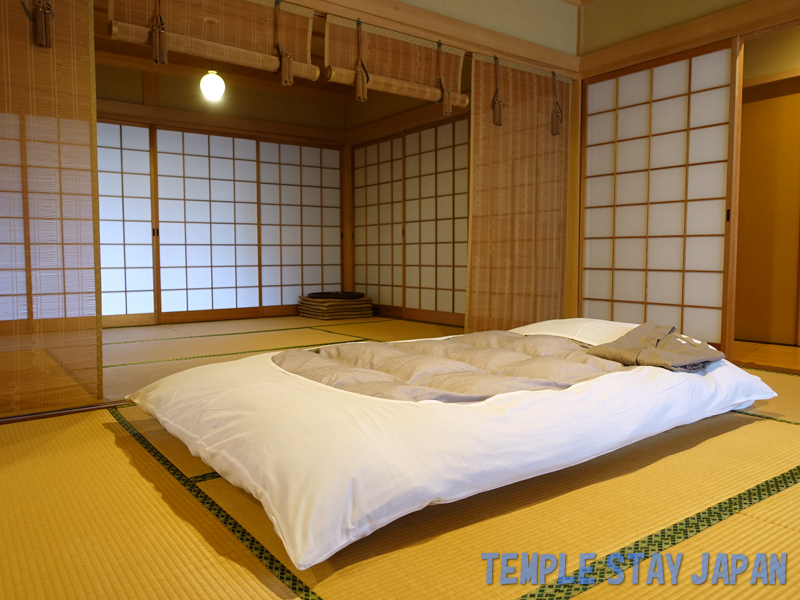
In the next room, a fluffy futon was laid out. I stayed alone, but if you are staying with more than one person, I think futons will be laid out in the adjacent room as well.
Further inside, there was a refrigerator, microwave, tableware, etc. There is also a kettle and coffee and tea available for free use.
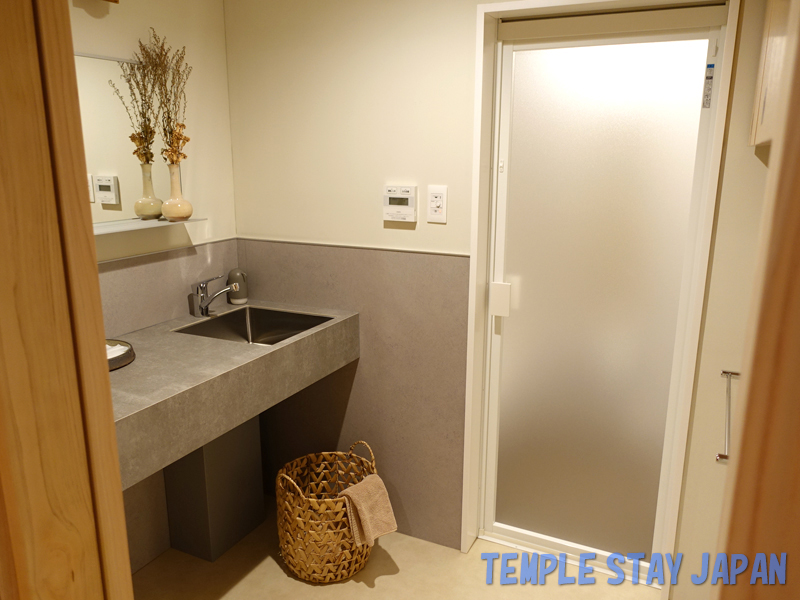
Next to it was the washroom and bathroom. There were towels, bath towels, work clothes, shampoo, conditioner, body soap, toothbrushes, razors, and combs provided.
Buddhist vegetarian cuisine
For dinner, I had Buddhist vegetarian cuisine. The menu includes vegetable sushi, grated yam soup, grilled eggplant, hot tofu, sesame tofu, red kidney beans, konjac, dried daikon radish strips, sweet simmered burdock, and sakura mochi (Cherry blossom rice cake).
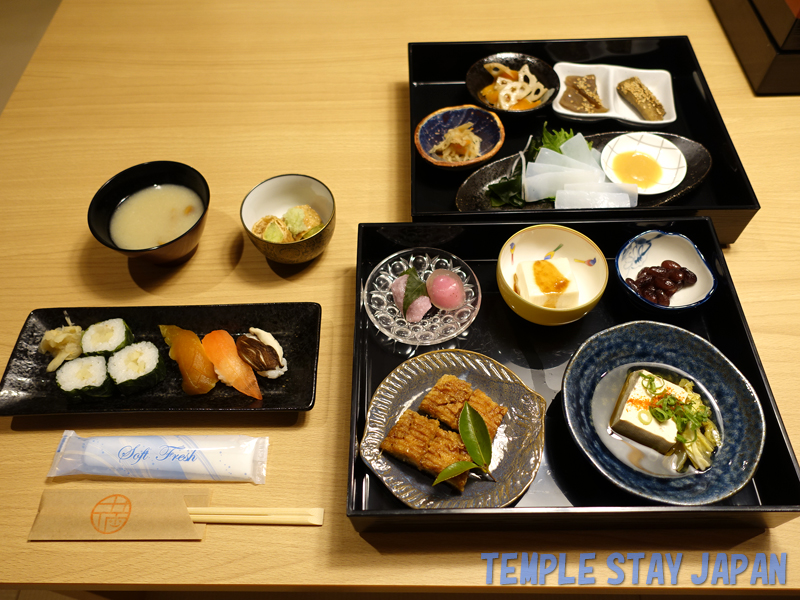
Before and after the meal, we read out words of gratitude for the food. The food was very delicious.
Temple experience in the main hall
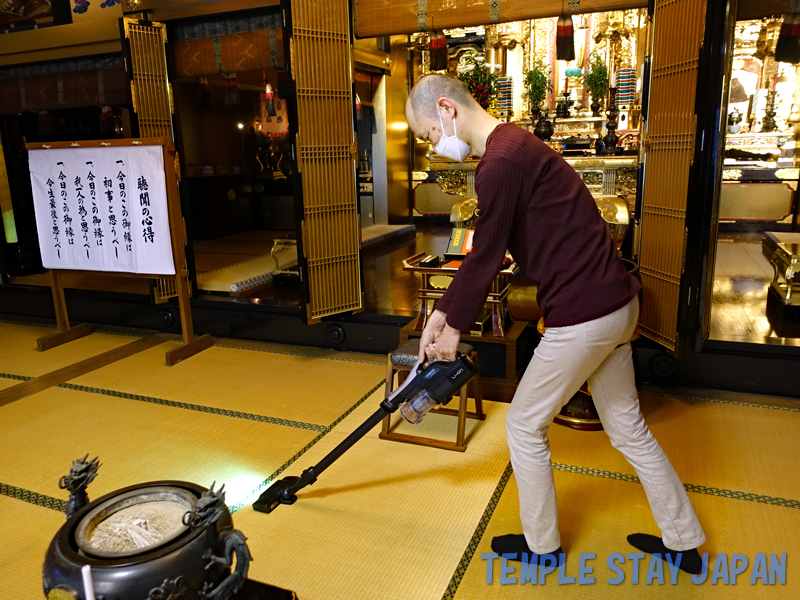
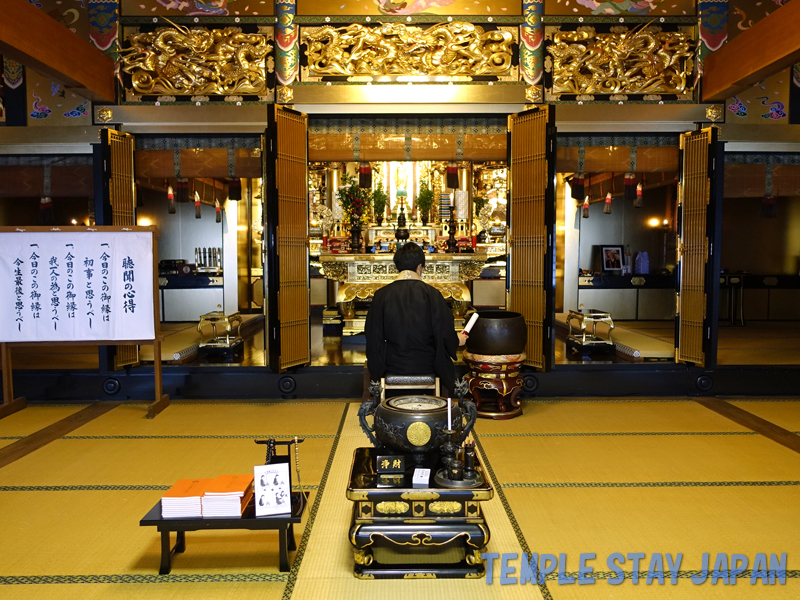
The next morning, I had my temple experience in the main hall starting at 7am. First, I vacuumed the floor.
Next came morning service. The monk chanted sutras in front of the Buddha.
Breakfast and copying sutras
After the service, I returned to my room and had breakfast. Breakfast consisted of rice balls, chikuwa (fish cake), and soup. I put my hands together in prayer and recited the words before eating.
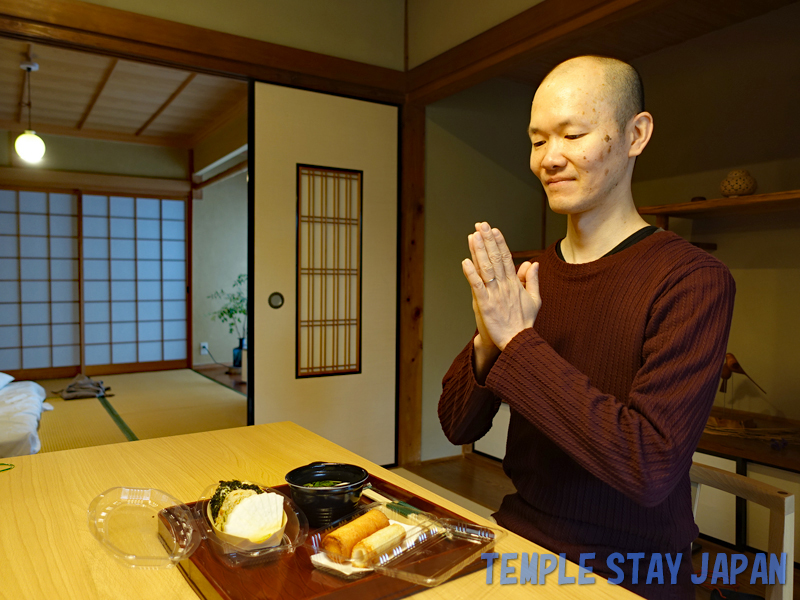
Since I was active from the morning, breakfast tasted even better than usual.
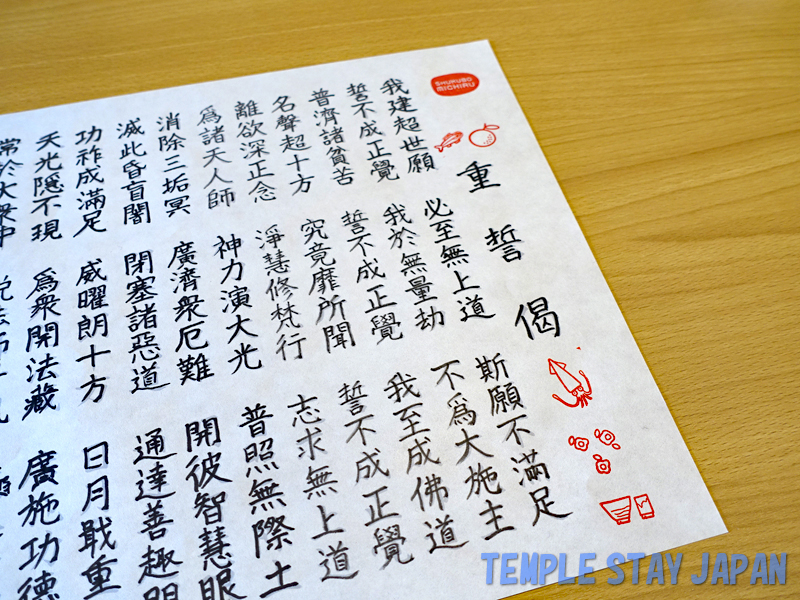
After breakfast, I started copying sutras at 9am. I copied the lightly printed characters of the sutra with a brush pen.
This copying of the sutra was a little different, as after I finished I stamped the paper with an illustration on it. The designs were all related to temples and the city of Hagi. There were local specialties such as summer mandarins, horse mackerel, squid, camellia, grilled dishes, and sake.
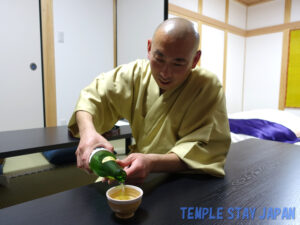
The monk who runs this shukubo was very kind. I had a very comfortable stay for two days.

After checking out, I left my luggage with the shukubo and went for a walk around the town of Hagi.